





What's Happening?
Turkmenistan and the International Atomic Energy Agency (IAEA) have engaged in discussions regarding the expansion of cooperation in the peaceful use of atomic and radiation technologies. These discussions covered various applications, including healthcare,
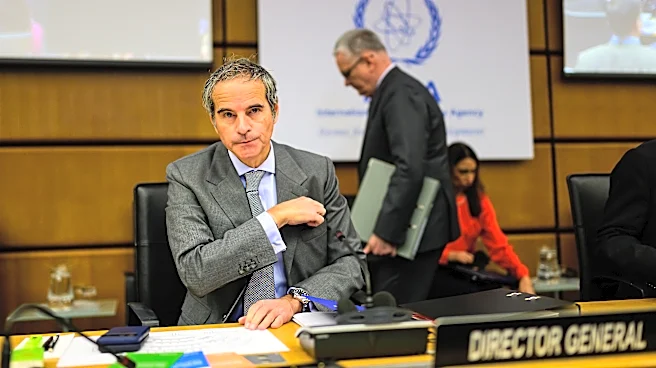
agriculture, environmental protection, and water management. A key focus of the meeting was specialist training at Myrat Garryyev State Medical University, encompassing programs in radiology, radiotherapy, and oncology. The IAEA presented its programs for specialist training, international internships, expert missions, and knowledge exchange, particularly in nuclear medicine, medical physics, radiotherapy, and radiation protection. Turkmenistan's engagement with nuclear technologies primarily centers on peaceful applications, implemented in collaboration with the IAEA. Turkmenistan joined the IAEA in 2016 and has since been progressively expanding its legal and technical cooperation with the agency, including participation in safeguards agreements and the development of national legislation on radiation safety and nuclear security. Earlier in April, Chairman of Turkmenistan’s Halk Maslahaty Gurbanguly Berdimuhamedov and IAEA Director General Rafael Grossi also discussed expanding cooperation during a meeting in Vienna.
Why It's Important?
This collaboration is important as it highlights the growing global interest in leveraging nuclear and radiation technologies for peaceful and beneficial purposes, particularly in developing nations. For Turkmenistan, expanding its capabilities in nuclear medicine, radiation safety, and related fields can significantly improve public health outcomes, enhance agricultural productivity, and strengthen environmental monitoring efforts. The IAEA's role in providing training, expertise, and international standards is crucial for ensuring these technologies are used safely and securely, adhering to non-proliferation principles. This partnership can serve as a model for other countries seeking to develop their scientific and technological infrastructure while maintaining international safeguards. It also underscores the IAEA's broader mission beyond nuclear weapons control, focusing on the peaceful applications of atomic energy for sustainable development.
What's Next?
Following these discussions, Turkmenistan is expected to continue its efforts in developing national legislation on radiation safety and nuclear security, aligning with IAEA guidelines. The implementation of specialist training programs at Myrat Garryyev State Medical University will likely proceed, enhancing the country's human resources in nuclear medicine and related fields. Further international internships and expert missions facilitated by the IAEA are anticipated, fostering knowledge exchange and capacity building. This ongoing cooperation will likely lead to the adoption of more advanced atomic and radiation technologies in Turkmenistan's healthcare, agriculture, and environmental sectors. The IAEA will continue to provide technical assistance and support, ensuring that Turkmenistan's peaceful nuclear program adheres to international safety and security standards.
Beyond the Headlines
The collaboration between Turkmenistan and the IAEA extends beyond immediate technical benefits, touching upon broader themes of international cooperation and responsible technological development. By focusing on peaceful applications, Turkmenistan is demonstrating a commitment to using nuclear science for societal good, which can positively influence regional perceptions and foster trust. This partnership also highlights the importance of international organizations like the IAEA in guiding nations through the complexities of nuclear technology, preventing proliferation while promoting beneficial uses. The emphasis on training and capacity building suggests a long-term investment in human capital, which is essential for sustainable development in any advanced technological field. This initiative could also inspire other nations to explore similar partnerships, contributing to a global network of peaceful nuclear applications and shared scientific advancement.