





What's Happening?
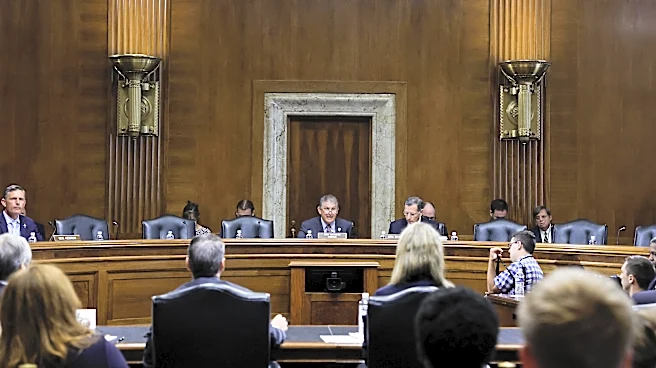
U.S. Senator Gary Peters (MI) has played a key role in advancing the bipartisan Kids Online Safety Act out of the Senate Commerce, Science, and Transportation Committee. As a cosponsor of the bill, Senator Peters is supporting legislation designed to protect
children online by providing young people and parents with necessary tools, safeguards, and transparency. The bill mandates that social media platforms prioritize the well-being of children, ensuring a safer online environment by default. It also requires independent audits by experts to verify that these platforms are effectively addressing risks to minors. Senator Peters emphasized the urgency for Congress to act, citing the potential for social media to expose children to dangerous content and harmful situations. The legislation aims to give minors options to protect their information, disable addictive features, and opt out of algorithmic recommendations, with the strongest settings enabled by default.
Why It's Important?
This legislative advancement is crucial for several reasons, primarily concerning the safety and digital well-being of minors in the U.S. The Kids Online Safety Act addresses growing concerns among parents, educators, and policymakers about the potential harms children face on social media platforms, including exposure to dangerous content, cyberbullying, and the psychological impacts of addictive features. By requiring platforms to implement stronger default safety settings and provide parents with more control, the bill seeks to shift the responsibility for online safety more directly onto technology companies. This could lead to significant changes in how social media platforms design their services, potentially impacting their business models and user engagement strategies. The requirement for independent audits also introduces a new layer of accountability, which could set a precedent for future regulations in the tech industry. The legislation reflects a broader societal push to regulate the digital space to protect vulnerable populations, potentially influencing similar legislative efforts at state and federal levels.
What's Next?
The Kids Online Safety Act, having passed out of the Senate Commerce, Science, and Transportation Committee, will now proceed to the full Senate for consideration. Senator Peters has expressed his commitment to working with colleagues from both parties to ensure its passage. If approved by the Senate, the bill would then need to pass the House of Representatives and be signed into law. Should it become law, social media platforms would face new legal obligations to prevent and mitigate harms to minors, including issues like the promotion of suicide, eating disorders, substance abuse, sexual exploitation, and unlawful products. They would also be required to provide academic and public interest organizations with access to critical datasets for research into the well-being of minors. The implementation of these requirements would likely involve significant operational and technical adjustments for tech companies, potentially leading to new industry standards for child online safety.
Beyond the Headlines
The Kids Online Safety Act touches upon deeper ethical and societal implications regarding the balance between free speech, corporate responsibility, and child protection in the digital age. The debate surrounding this bill highlights the ongoing tension between the open nature of the internet and the need to safeguard vulnerable users. Critics of such legislation often raise concerns about potential censorship or overreach, while proponents argue that the unique vulnerabilities of children necessitate stronger protections. The bill's focus on algorithmic recommendations and addictive features also points to a growing recognition of the psychological impact of technology on young minds. This legislative effort could catalyze a broader re-evaluation of how technology companies design their products and services, potentially leading to a more child-centric approach in the development of future digital platforms. It also underscores the evolving role of government in regulating digital spaces to address societal challenges posed by rapid technological advancement.