


What's Happening?
The Golden Gate Bridge, Highway and Transportation District has implemented a temporary weekday schedule for its ferry services due to ongoing repairs and maintenance of its existing fleet. Several vessels, including the M.V. Del Norte and M.V. Napa,
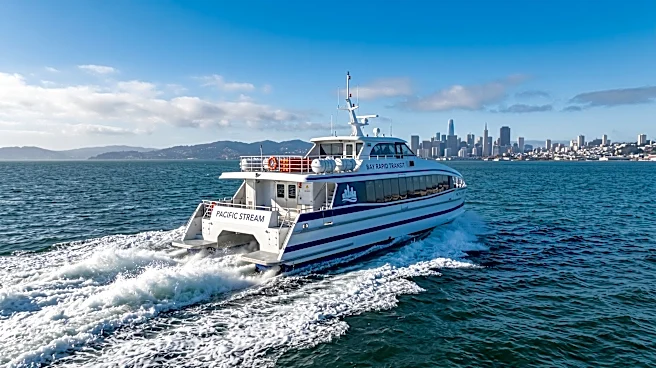
are currently out of service for regulatory drydocking, engine overhauls, or engine failure repairs. The M.V. Napa, for instance, is targeted to return to service in spring 2027 following engine repairs. Concurrently, the District is moving forward with a long-term fleet replacement program. In November 2025, the Board approved a contract to build the first two vessels of a new high-speed, low-emission fleet. The new M.V. Liwa-class design, capable of carrying 500 passengers, is projected to enter service in 2028. These next-generation ferries are designed to significantly reduce emissions and power consumption while maintaining service reliability.
Why It's Important?
This development is important for commuters and tourists relying on the Golden Gate Ferry system, as the temporary schedule directly impacts their travel plans and daily routines. The ongoing repairs highlight the challenges of maintaining an aging fleet and the necessity of significant infrastructure investment. The introduction of the new M.V. Liwa-class vessels signifies a strategic shift towards modernizing public transportation with an emphasis on environmental sustainability and operational efficiency. These new ferries are expected to cut emissions by 80% and use 30% less power, aligning with broader environmental goals and potentially setting a precedent for other public transit systems. The long-term replacement program, spanning eight years, will ensure the continued viability and improved quality of ferry services in the San Francisco Bay Area.
What's Next?
The temporary weekday schedule will remain in effect for the next few weeks as the Golden Gate Ferry system addresses the current repair needs of its fleet. Passengers are advised to check online for updated schedules and potential service disruptions. Looking ahead, the construction of the new M.V. Liwa-class vessels will continue, with the first two expected to enter service in 2028. These vessels are part of a larger plan to introduce seven to eight identical ferries through 2033, aiming to create a consistent and modern experience for riders. The District will likely continue to monitor the performance of its existing fleet while integrating the new, more efficient vessels into service, gradually phasing out older models that have reached the end of their operational life.
Beyond the Headlines
The Golden Gate Ferry's fleet modernization program reflects a broader trend in public transportation towards sustainable and technologically advanced solutions. The commitment to low-emission ferries underscores the increasing pressure on transportation agencies to reduce their carbon footprint and contribute to climate change mitigation efforts. This initiative could serve as a model for other urban ferry systems in the U.S. and globally, demonstrating how strategic investment in new technology can enhance service quality while addressing environmental concerns. The transition also highlights the economic implications of maintaining aging infrastructure versus investing in new, more efficient assets, balancing immediate operational needs with long-term sustainability and cost-effectiveness.