






What's Happening?
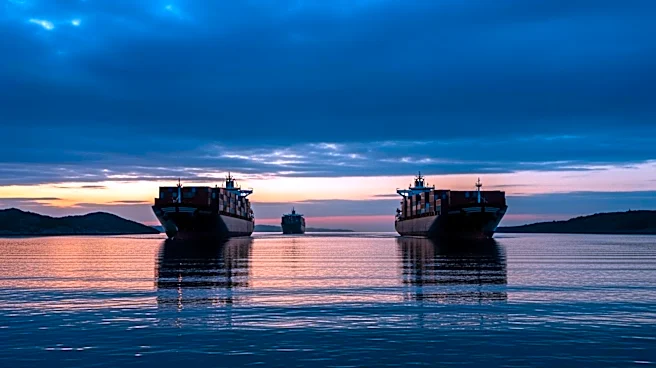
Iran has detained two container ships, the Panama-flagged MSC Francesca and the Liberia-flagged Epaminondas, in the Strait of Hormuz, citing maritime violations. The Iranian Revolutionary Guard Corps Navy accused the ships of operating without required
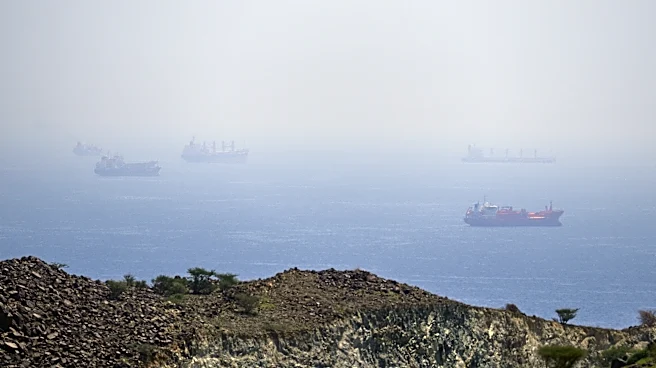
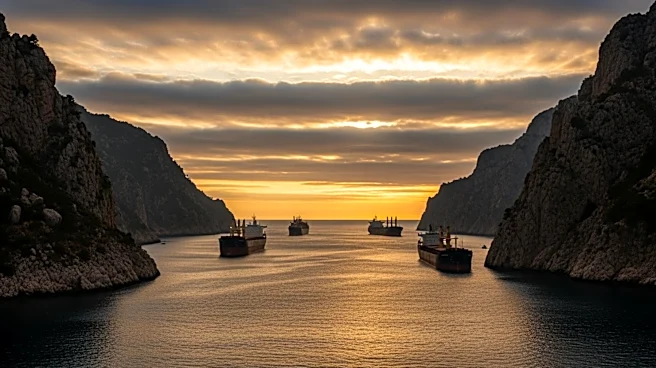
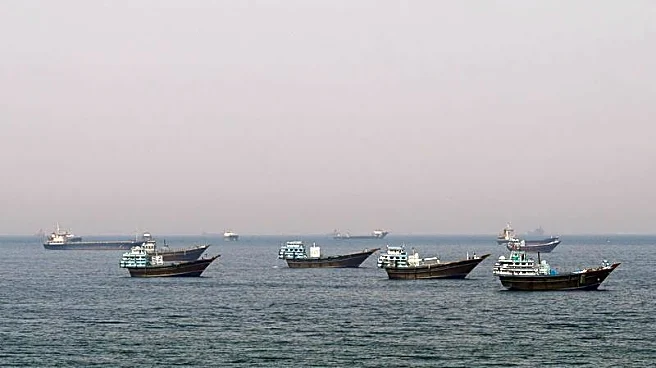
permits and tampering with navigation systems. The MSC Francesca was confirmed seized by Montenegro's maritime minister, while the Epaminondas reported being fired upon and damaged. The incidents mark the first seizures since the conflict with the U.S. and Israel began in February. The Strait of Hormuz, a critical chokepoint for global oil and gas supply, has seen reduced traffic due to the ongoing conflict.
Why It's Important?
The seizure of these ships underscores the heightened tensions in the Strait of Hormuz, a vital passage for global energy supplies. The actions by Iran could further destabilize the region and impact global oil prices, as evidenced by the recent increase in oil prices following the incidents. The situation highlights the vulnerability of international shipping routes to geopolitical conflicts and the potential for disruptions in global trade. The safety of seafarers and the security of maritime operations in the region remain significant concerns for the international community.
What's Next?
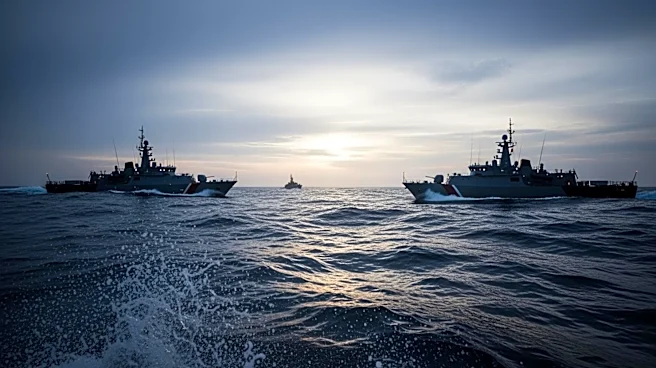
Negotiations between the shipping companies and Iranian authorities are ongoing, with a focus on ensuring the safety of the crew members. The international community, particularly countries reliant on the Strait of Hormuz for energy supplies, may seek diplomatic solutions to de-escalate tensions. The situation could lead to increased naval presence in the region to protect shipping lanes and prevent further incidents. The outcome of these negotiations and any potential diplomatic interventions will be closely watched by global stakeholders.