








What's Happening?
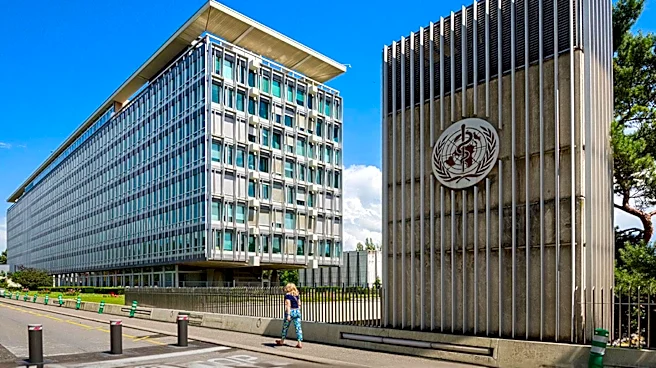
The World Health Organization (WHO) has released a global assessment titled 'State of Inequality: Noncommunicable diseases and their risk factors,' which details how socioeconomic factors influence the risks of noncommunicable diseases (NCDs) and access
to their prevention, diagnosis, and treatment. The report, based on national data from the past decade, identifies significant disparities across income, education, gender, age, disability, and geographical location. Key findings indicate that in low- and middle-income countries, less educated populations exhibit higher rates of hypertension and diabetes. Furthermore, poorer, less-educated women are less likely to receive cervical cancer screenings, and rural populations often face reduced access to hypertension diagnosis and treatment. Men are noted to have higher rates of tobacco and alcohol use but lower rates of hypertension diagnosis and treatment. The report also highlights barriers to healthcare for people with disabilities and migrants, underscoring a broad spectrum of inequalities in NCD care globally.
Why It's Important?
This WHO report is crucial as it systematically exposes the populations most vulnerable to being left behind in the global fight against chronic diseases. By detailing the specific socioeconomic inequalities, it provides a roadmap for targeted interventions. The findings underscore that health outcomes are not solely determined by medical advancements but are deeply intertwined with social determinants of health. For the U.S., while not explicitly detailed in this global report, these findings serve as a reminder of similar disparities that exist domestically, particularly among underserved communities. Understanding these global patterns can inform national strategies to address health equity, ensuring that public health policies and healthcare delivery systems are designed to reach vulnerable populations effectively. The report's call for using inequality data as a 'tool for action' emphasizes the need for data-driven policy-making to close service gaps and improve health outcomes for all segments of society.
What's Next?
The WHO report urges countries to actively utilize inequality data to target prevention and care efforts, aiming to improve outcomes and close existing service gaps. An accompanying brief from the WHO recommends implementing proven population-wide interventions and enhancing access to healthcare for underserved communities. Moving forward, national health ministries and international organizations are expected to leverage these findings to develop and refine their strategies for NCD control. This will likely involve tailored public health campaigns, improved infrastructure for healthcare delivery in rural and low-income areas, and policies aimed at reducing socioeconomic barriers to care. There will also be an increased focus on integrating disaggregated data into health planning to ensure that interventions are equitable and reach those most in need, potentially leading to new global health initiatives and funding allocations focused on health equity.
Beyond the Headlines
The implications of this report extend beyond immediate healthcare policy, touching upon broader ethical and societal considerations. The persistent disparities highlighted by the WHO underscore a fundamental issue of social justice in health. It reveals that access to basic health services and protection from chronic diseases remain privileges rather than universal rights for many, particularly in vulnerable populations. This situation can perpetuate cycles of poverty and disadvantage, as poor health limits educational and economic opportunities. The report implicitly calls for a more holistic approach to development, where health equity is integrated into economic and social policies. Addressing these inequalities will require not only medical interventions but also systemic changes in education, employment, and social welfare, fostering a more equitable distribution of resources and opportunities to achieve sustainable improvements in global health.