






What's Happening?
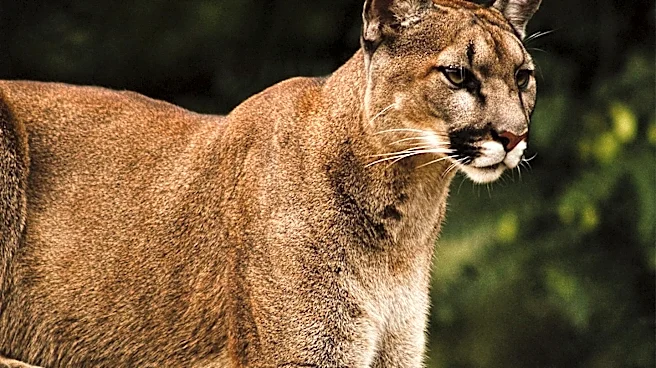
A mountain lion was spotted in the Panhandle area of Golden Gate Park, near Fell Street and Baker Street, on Saturday night. The sighting was confirmed by officials from SF Recreation & Parks after a resident walking their dog observed the animal in a tree.
An alert was subsequently issued by multiple city and state agencies, advising the public on how to react if they encountered the mountain lion, including instructions to slowly back away and make oneself appear 'big' if the animal approached. By Sunday morning, the alert was lifted. This incident follows previous sightings of a young mountain lion in Lafayette Park and Pacific Heights in January, which was eventually tranquilized and relocated by SF Animal Care and Control. Animal Care & Control officials noted that mountain lion sightings in San Francisco are common, with most animals finding their way out of the city naturally.
Why It's Important?
The repeated presence of mountain lions in urban areas like San Francisco highlights the increasing interface between wildlife and human populations, driven by factors such as habitat encroachment and the animals' natural exploratory behaviors. This trend poses public safety concerns, necessitating clear communication and protocols from local authorities to ensure both human and animal welfare. For residents, these sightings underscore the importance of awareness and adherence to safety guidelines when in or near natural spaces within the city. From an ecological perspective, it prompts discussions about urban planning, wildlife corridors, and conservation efforts to manage these interactions effectively. The need for tranquilization and relocation in previous instances also points to the challenges in allowing large predators to coexist safely within densely populated environments.
What's Next?
Although the recent alert has been lifted, SF Animal Care & Control continues to request that any new sightings be reported to them directly. This ongoing request indicates a proactive approach to monitoring wildlife movements within the city. Authorities will likely continue to educate the public on appropriate responses to mountain lion encounters and may review existing protocols for managing such situations. Future actions could include enhanced monitoring in areas prone to wildlife sightings and further public awareness campaigns. The long-term strategy will likely involve balancing urban development with the preservation of natural habitats and corridors to minimize human-wildlife conflicts, potentially leading to policy discussions on urban wildlife management.
Beyond the Headlines
The recurring presence of mountain lions in San Francisco's urban parks raises deeper questions about the ecological health of the region and the adaptability of wildlife to human-dominated landscapes. It challenges the traditional perception of urban environments as solely human spaces, forcing a re-evaluation of how cities can integrate and coexist with native fauna. This phenomenon also touches upon the ethical considerations of wildlife management, particularly regarding intervention versus allowing natural processes to unfold. The public's reaction, ranging from fascination to fear, reflects a broader societal debate on conservation, urban sprawl, and the intrinsic value of wild animals. It could also influence future urban planning decisions, encouraging the creation of more wildlife-friendly infrastructure and green spaces.