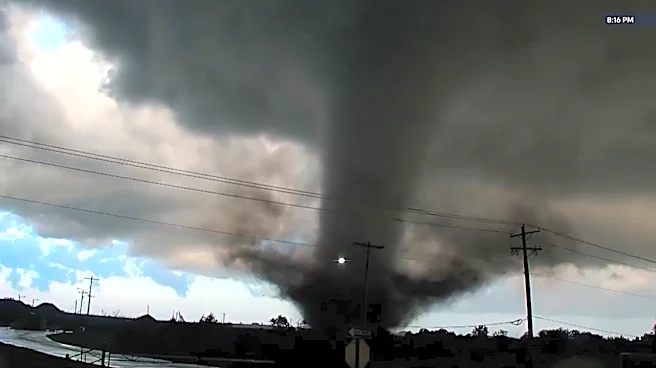







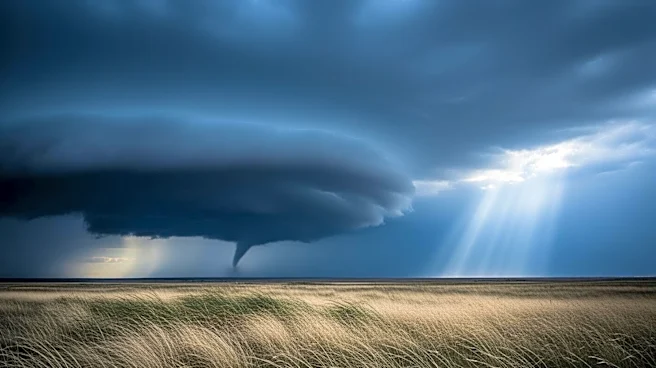
What's Happening?
Kansas City is bracing for severe weather conditions as the National Weather Service has issued tornado watches for several counties in Missouri and Kansas. The affected areas include Andrew, Atchison, Holt, and Nodaway counties in Missouri, and Anderson,
Douglas, and Franklin counties in Kansas. The weather alert is in effect until 7 p.m. for Missouri and 9 p.m. for Kansas. The forecast predicts that a warm front could trigger storms in north-central Missouri early in the day, while a cold front and jet streak are expected to initiate supercell thunderstorms in Kansas City between 4 p.m. and 8 p.m. These storms are anticipated to evolve into a line as they move into the Kansas City metro area between 7 p.m. and 11 p.m. The primary threats include strong straight-line winds, with potential for large hail and tornadoes. The storms are expected to exit the area by 2 a.m.
Why It's Important?
The severe weather poses significant risks to residents in the affected areas, potentially leading to property damage, power outages, and disruptions to daily life. Tornadoes and strong winds can cause extensive damage to homes and infrastructure, while hail can damage vehicles and crops. The issuance of tornado watches highlights the need for residents to stay informed and prepared for possible emergency situations. The impact on local communities could be substantial, with emergency services on high alert to respond to any incidents. The weather conditions also underscore the importance of having effective communication and emergency response plans in place to ensure public safety.
What's Next?
Residents in the affected areas are advised to monitor weather updates and be prepared to take shelter if necessary. Emergency services and local authorities will be on standby to respond to any incidents resulting from the severe weather. The National Weather Service will continue to provide updates as the situation develops. Looking ahead, there is a potential for more severe weather on Sunday and Monday, which could further impact the region. It is crucial for residents to remain vigilant and follow guidance from local authorities.