



What's Happening?
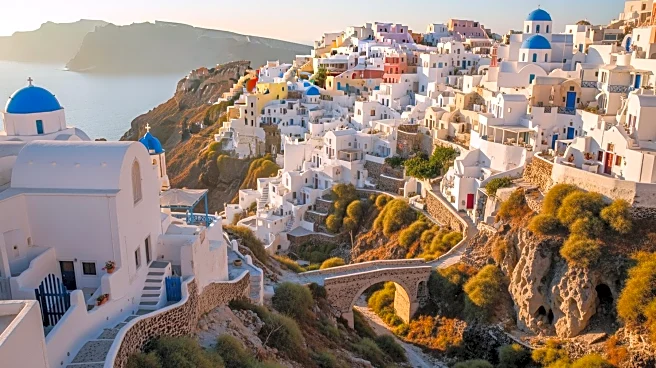
Santorini, a popular Greek island known for its picturesque landscapes, is grappling with the negative impacts of overtourism. The island, home to about 15,500 residents, hosted approximately 3.4 million tourists in 2023, leading to severe congestion
and environmental degradation. The influx of tourists, particularly from cruise ships, has overwhelmed local infrastructure, causing issues with water supply, waste management, and traffic. The economic benefits of tourism are unevenly distributed, with rapid construction and illegal building exacerbating the situation. The island's infrastructure is struggling to cope with the increased demand, leading to significant challenges for both residents and visitors.
Why It's Important?
The situation in Santorini highlights the broader issue of overtourism, which affects many popular destinations worldwide. The island's experience serves as a cautionary tale about the unsustainable growth of tourism and its impact on local communities and environments. The economic reliance on tourism can lead to short-term gains but long-term challenges, including environmental degradation and loss of local culture. Addressing these issues requires a balanced approach that considers both economic benefits and the preservation of natural and cultural resources.
What's Next?
In response to the crisis, authorities have implemented measures such as a €20 tax for cruise passengers and a daily limit on cruise visitors. However, challenges remain, and further action is needed to ensure sustainable tourism practices. The island's future depends on effective regulation and management strategies that prioritize environmental conservation and community well-being. Exploring alternative destinations and promoting off-season travel could also help alleviate pressure on Santorini.