









What's Happening?
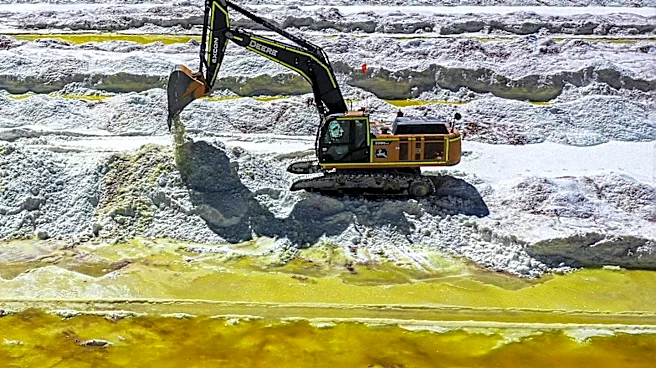
Novandino Litio, a joint venture between Chilean lithium producer SQM and state-owned copper miner Codelco, has filed for environmental approval for a $3 billion project in the Atacama salt flat. The project, named 'Operational Continuity and Future Mining
Development Project in the Atacama Salt Flat,' aims to extend lithium production until 2060. This initiative is part of Chile's strategy to increase state involvement in the lithium sector, which is crucial for electric vehicle battery production. The project plans to maintain current operations while introducing new infrastructure and technologies to improve efficiency in lithium production and the extraction of potassium salts and other brine-derived products. The plan includes a gradual shift to new processing technologies to reduce freshwater use and enhance environmental monitoring. SQM CEO Ricardo Ramos anticipates final approval by 2029, with investment starting in 2030.
Why It's Important?
The project is significant as it aligns with global efforts to secure critical minerals necessary for the transition to clean energy technologies. Lithium is a key component in electric vehicle batteries, and increasing its production is vital for meeting the growing demand for sustainable transportation solutions. The involvement of state-owned Codelco highlights Chile's commitment to leveraging its natural resources for economic growth while ensuring environmental sustainability. The project's focus on reducing freshwater use and improving resource efficiency addresses environmental concerns associated with lithium extraction. Successful implementation could position Chile as a leading supplier of lithium, influencing global markets and potentially stabilizing lithium prices.
What's Next?
If the environmental approval is granted, the project will proceed with its planned investments starting in 2030. The gradual introduction of new technologies and infrastructure will likely attract attention from international stakeholders interested in sustainable lithium production. The project's progress will be closely monitored by environmental groups and industry analysts, given its potential impact on the Atacama region's ecosystem. The Chilean government may also face pressure to ensure that the project's benefits are equitably distributed among local communities.