



What's Happening?
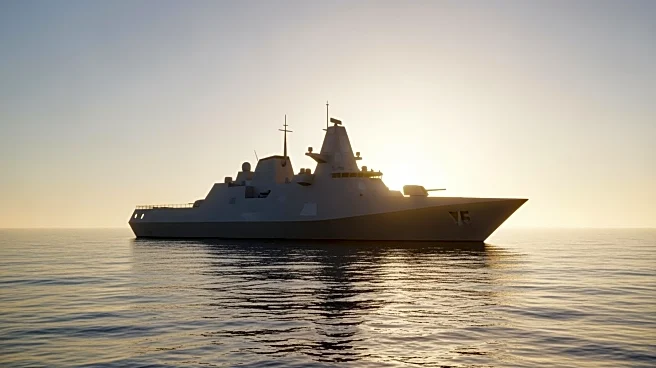
President Trump has unveiled a new generation of U.S. Navy battleships, dubbed the 'Trump Class,' during an announcement at Mar-a-Lago. These ships are part of the 'Golden Fleet' initiative and are equipped with advanced missiles, nuclear weapons, and lasers.
The announcement is part of a broader trend of naming initiatives and infrastructure after President Trump, including the Trump Institute for Peace and TrumpRx pharmaceuticals. The new ships are intended to symbolize national power and create manufacturing jobs in the U.S. However, the decision to focus on large battleships has sparked debate, with some experts suggesting that smaller, more agile vessels might be more effective in modern naval warfare.
Why It's Important?
The introduction of the 'Trump Class' warships highlights President Trump's focus on strengthening U.S. military capabilities and his desire to leave a lasting legacy. The initiative is expected to boost the U.S. manufacturing sector by creating jobs related to shipbuilding and defense. However, the emphasis on large battleships raises questions about the strategic direction of the U.S. Navy, especially in light of advancements in drone and hypersonic weapon technologies. The decision to name the ships after President Trump reflects his approach to branding and legacy-building, which has been a hallmark of his presidency.
Beyond the Headlines
The naming of the 'Trump Class' ships underscores President Trump's unconventional approach to the presidency, where personal branding and legacy are prioritized. This move may have political implications, as it could be perceived as prioritizing personal recognition over broader national interests. The focus on large battleships also reflects a traditional view of naval power, which may not align with contemporary military strategies. The initiative could face criticism from those who view it as an example of excessive personalization of public assets and a potential misallocation of defense resources.