






What's Happening?
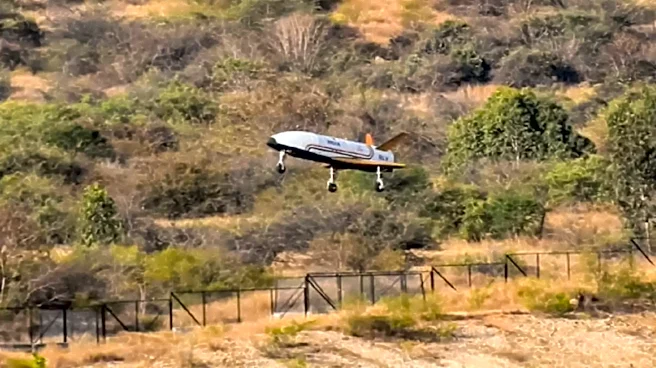
REGENT, a company based in North Kingstown, Rhode Island, has announced that its 13-foot Squire seaglider drone successfully completed an electronic warfare gauntlet at Michigan's Silent Swarm range. This test was a crucial condition set by the Marine
Corps Warfighting Lab (MCWL) for considering the Squire for Pacific deployment. The Squire is a unique unmanned surface and aerial vehicle (USA-V) that operates in three stages: floating, foiling, and then flying in ground effect at up to 70 knots, a wingspan off the water. This design aims to overcome the rough-water challenges that plagued previous Wing-in-Ground (WIG) effect craft. The Silent Swarm event, which ran from July 13 to 24, involved exposing small uncrewed systems to radar, communications interference, navigation spoofing, infrared, and directed-energy effects. The Squire carried payloads for electronic attack, protection, and warfare support, demonstrating its ability to operate within a joint operational picture while facing professional jamming attempts. The MCWL has yet to issue a public statement regarding the test results or its decision on the Squire's future deployment.
Why It's Important?
The successful completion of the electronic warfare gauntlet by REGENT's Squire seaglider could represent a significant advancement in military logistics and reconnaissance capabilities, particularly for operations in the Pacific. The Squire's ability to operate below radar line-of-sight and above sonar detection, combined with its independence from runway infrastructure, makes it a potentially valuable asset for island-hopping operations. This technology could offer a new paradigm for transporting small payloads, such as sensors or medical supplies, in contested environments where traditional air or sea transport might be vulnerable. For the U.S. Marine Corps, the adoption of such a system could enhance their operational flexibility and reduce risks to personnel. The silence from the MCWL following the test is noteworthy, as it could indicate either a thorough internal review process or a cautious approach to announcing a potentially revolutionary capability. The outcome of the Marine Corps' decision will determine whether WIG technology, after decades of skepticism, finally finds a practical and impactful military application.
What's Next?
The immediate next step is the Marine Corps Warfighting Lab's (MCWL) official statement regarding the Squire seaglider's performance and its decision on Pacific employment. The MCWL had previously stated that a decision would be made if the technology proved out at Silent Swarm and in a full-size flight test, the latter of which was scheduled for early August. The lack of a public statement from the Marines following the successful gauntlet and the passing of the second test window suggests an ongoing internal evaluation. If the MCWL decides to proceed, it could lead to further development, procurement, and integration of the Squire into Marine Corps operations, potentially influencing future defense strategies for the Pacific region. Conversely, a decision against deployment would raise questions about the practical limitations or perceived value of WIG technology despite its technical achievements. REGENT, having already established a defense division and secured significant contracts, will be closely awaiting the Marine Corps' determination, as it will heavily influence the future trajectory of their seaglider technology.
Beyond the Headlines
The development and testing of the Squire seaglider touch upon several deeper implications beyond immediate military applications. Ethically, the deployment of autonomous or semi-autonomous drones in warfare raises questions about decision-making in combat and the potential for unintended consequences. Legally, the classification of the Squire as an 'unmanned surface and aerial vehicle' (USA-V) highlights the evolving nature of military technology and the need for new regulatory frameworks to govern such hybrid systems. Culturally, the successful re-evaluation of Wing-in-Ground (WIG) effect technology, which has historically faced skepticism, could signal a shift in how innovative but previously unproven concepts are approached within defense research and development. The potential for the Squire to operate with a low signature—below radar and above sonar—could also trigger a new arms race in stealth and counter-stealth technologies. Furthermore, the broader shift towards smaller, more affordable, and potentially expendable uncrewed systems, as seen with the Squire, reflects a strategic move to mitigate risks to human personnel and adapt to modern warfare's evolving demands.