




What's Happening?
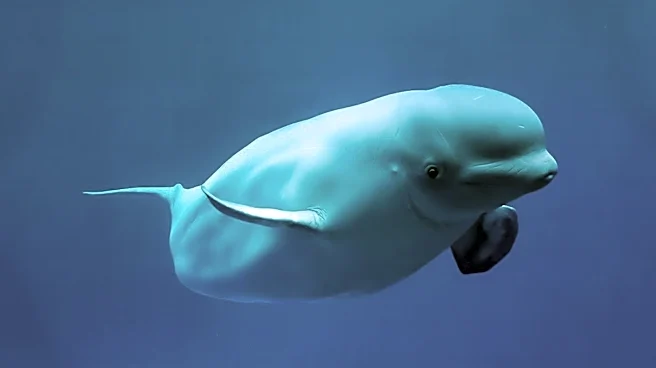
Two beluga whales, Bertie Bott and Frankie, have been relocated from the closed Marineland theme park in Canada to SeaWorld San Antonio as part of an international rescue effort. This move is part of a larger operation to relocate 28 belugas to various
aquariums across the United States. The National Oceanic and Atmospheric Administration approved the relocation to ensure the whales receive necessary medical care and husbandry, which is not available in Canada. The relocation involved a complex journey by flat-bed trucks and a cargo plane, with caretakers and veterinarians monitoring the whales' conditions. The whales are now settling into their new environment, where they are expected to thrive.
Why It's Important?
The relocation of the beluga whales is significant as it highlights the challenges and responsibilities involved in caring for marine animals, especially when facilities close. The operation underscores the importance of international cooperation in wildlife conservation and the ethical considerations of animal welfare. By moving the whales to facilities that can provide appropriate care, the effort ensures their well-being and survival. This relocation also offers educational opportunities for the public, as visitors to SeaWorld and other aquariums can learn about belugas and the importance of marine conservation. The move reflects a commitment to preserving marine life and addressing the needs of animals in captivity.
What's Next?
SeaWorld San Antonio will continue to monitor the health and behavior of the relocated belugas, performing regular medical assessments. The park plans to introduce the new arrivals to the existing beluga population gradually. Additional belugas from Marineland are expected to arrive at SeaWorld San Antonio, while others will be relocated to aquariums in Georgia, Chicago, San Diego, and Spain. The success of this operation may influence future relocations and conservation efforts for marine animals. Stakeholders, including conservationists and animal rights groups, will likely observe the outcomes of this relocation to assess its impact on the welfare of the belugas.