






What's Happening?
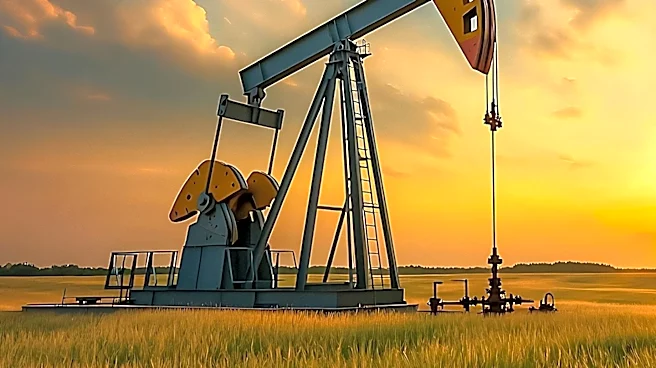
In 1951, oil crews utilized dynamite to test a wheat field in North Dakota, leading to the discovery of a significant oil reserve. This discovery, on farmer Clarence Iverson's land, resulted in a well that produced 585,000 barrels of oil over a period
of 28 years. The substantial yield from this well allowed Iverson to retire at the age of 44, highlighting the transformative impact of the oil find on his personal finances and livelihood. The use of dynamite in the exploration process was a key factor in identifying the oil-rich area, demonstrating a historical method of resource prospecting.
Why It's Important?
This historical event underscores the significant role of oil discoveries in shaping individual fortunes and regional economies in the United States. The Iverson well's long-term production contributed substantially to the local economy of North Dakota, illustrating how natural resource extraction can provide sustained economic benefits. The story also highlights the early methods of oil exploration, including the use of explosives like dynamite, which were common before more advanced geological surveying techniques became widespread. Such discoveries often led to rapid development in previously agricultural areas, creating new industries and employment opportunities. For farmers like Iverson, an oil strike could mean financial independence and an early retirement, fundamentally altering their life trajectory and the economic landscape of their communities.
What's Next?
While this specific event is historical, its legacy continues to influence discussions around resource management and land use in regions like North Dakota. The success of the Iverson well likely encouraged further oil exploration in the state, contributing to North Dakota's eventual status as a major oil-producing region. Future considerations in such areas often involve balancing agricultural interests with energy development, as well as addressing environmental concerns associated with oil extraction. The historical precedent set by discoveries like Iverson's continues to inform policy decisions regarding mineral rights, land leases, and the economic impact of energy industries on rural communities.
Beyond the Headlines
The story of Clarence Iverson's wheat field transcends a simple oil discovery; it represents a pivotal moment in the intersection of agriculture and energy in the American Midwest. It illustrates the dramatic shifts in wealth and lifestyle that could occur for landowners when valuable natural resources were found on their property. This event also subtly highlights the evolving relationship between human ingenuity and the exploitation of natural resources, where rudimentary yet effective methods like dynamite were employed to unlock vast underground reserves. The narrative contributes to the broader understanding of how resource booms have historically shaped American demographics, economic policies, and the very identity of certain regions, transforming agrarian landscapes into energy hubs and creating new socio-economic dynamics.