








What's Happening?
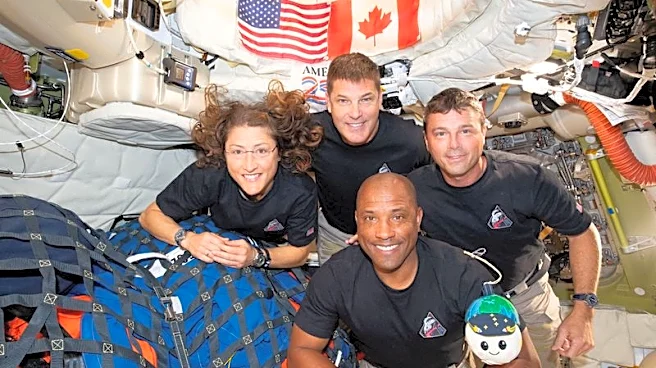
The Artemis II crew, consisting of Reid Wiseman, Victor Glover, Christina Koch, and Jeremy Hansen, is preparing to conclude their 10-day mission around the Moon. This mission marks the first lunar journey since the Apollo missions of the 1970s. The crew exited
the lunar sphere of influence on April 7, 2026, and is scheduled to splash down in the Pacific Ocean off the coast of California on April 10, 2026, at approximately 5:07 p.m. PDT (8:07 p.m. EDT). NASA and the U.S. Navy are coordinating the recovery of the astronauts and their Orion spacecraft, which will be retrieved by the amphibious dock ship U.S.S. John P. Murtha. NASA has conducted thorough checks of the spacecraft's exterior using external cameras to ensure there are no abnormalities or damage that could compromise the astronauts' safety during re-entry. Debbie Korth, the deputy manager of the Orion program, confirmed that there are no concerns for the re-entry phase.
Why It's Important?
The successful completion of the Artemis II mission is a significant milestone for NASA, as it represents a major step forward in the agency's efforts to return humans to the Moon and eventually to Mars. This mission not only demonstrates the capabilities of the Orion spacecraft and the Artemis program but also sets the stage for future lunar exploration missions. The mission's success could bolster public and governmental support for NASA's long-term goals in space exploration, potentially leading to increased funding and international collaboration. Additionally, the mission serves as a testament to the advancements in space technology and human spaceflight capabilities since the Apollo era.
What's Next?
Following the successful splashdown and recovery of the Artemis II crew, NASA will likely conduct a detailed analysis of the mission's data to inform future Artemis missions. The next step in the Artemis program is Artemis III, which aims to land astronauts on the lunar surface, including the first woman and the next man. This mission is expected to further advance NASA's goal of establishing a sustainable human presence on the Moon by the end of the decade. The outcomes of Artemis II will play a crucial role in refining the strategies and technologies needed for these future missions.