







What's Happening?
President Trump's proposed peace plan for Gaza has been rejected by Israeli Prime Minister Benjamin Netanyahu. The plan, which included a phased disarmament of Hamas and Israeli military withdrawal, was dismissed by Netanyahu under pressure from far-right
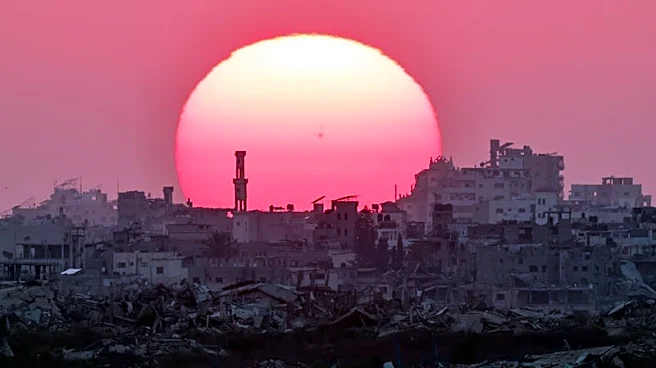
coalition members. The rejection comes amid ongoing Israeli airstrikes in Gaza, which have resulted in significant Palestinian casualties. The Israeli military has expanded its control over Gaza, contrary to the terms of a previous ceasefire agreement. The situation in Gaza remains dire, with limited access to humanitarian aid and essential services. The rejection of the peace plan highlights the challenges faced by the U.S. in mediating peace in the region, as well as the complex political dynamics within Israel.
Why It's Important?
The rejection of the peace plan underscores the difficulties in achieving a lasting resolution to the Israeli-Palestinian conflict. It reflects the broader geopolitical tensions in the Middle East, where U.S. influence is being tested. The situation in Gaza has humanitarian implications, with the potential for further escalation affecting regional stability. The U.S. faces a diplomatic challenge in balancing its support for Israel with efforts to address Palestinian grievances. The outcome of these developments could influence U.S. foreign policy and its relationships with Middle Eastern allies.
What's Next?
The U.S. may need to reassess its approach to Middle East peace efforts, potentially exploring alternative diplomatic strategies. The international community could increase pressure on Israel to comply with ceasefire agreements and engage in meaningful negotiations. Humanitarian organizations may call for increased aid and support for Gaza's civilian population. The situation could also impact upcoming U.S. elections, as public opinion on Middle East policy evolves.