
What's Happening?
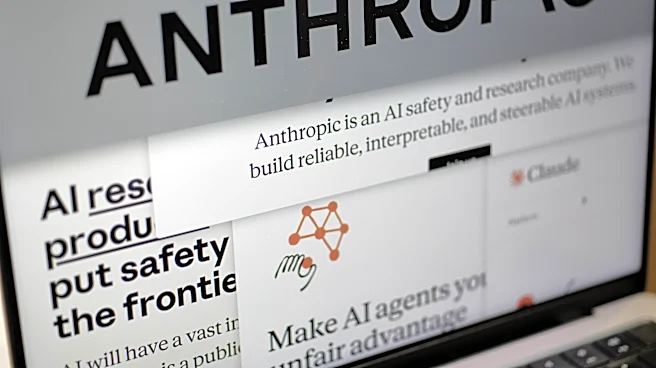
President Trump has indicated a potential shift in stance towards Anthropic, suggesting that a deal for the Department of Defense to use Anthropic's AI models could be possible. This follows a period of tension
where Anthropic was designated a supply chain risk to national security by the Pentagon, a label typically reserved for companies associated with foreign adversaries. The designation required defense contractors to certify they were not using Anthropic's models in military work. However, recent discussions between Anthropic CEO Dario Amodei and senior administration officials have been described as productive, focusing on shared priorities like cybersecurity and AI safety. The White House meeting on April 18, 2026, included Chief of Staff Susie Wiles and Treasury Secretary Scott Bessent, where Anthropic's new Mythos model was discussed.
Why It's Important?
The potential deal between Anthropic and the Department of Defense could have significant implications for U.S. national security and the AI industry. If Anthropic's AI models are integrated into defense operations, it could enhance cybersecurity measures and maintain America's lead in AI technology. However, the initial blacklisting of Anthropic highlights the complexities of balancing national security with technological advancement. The outcome of this situation could set a precedent for how the U.S. government interacts with AI companies, particularly those with advanced capabilities that could be perceived as security risks.
What's Next?
The legal status of Anthropic's blacklisting remains unresolved, with conflicting court rulings. The Pentagon's designation still stands, but a federal judge has temporarily blocked President Trump's directive to cease all federal use of Anthropic's technology. As discussions continue, the focus will likely be on how Anthropic can align its operations with national security requirements without compromising its principles, such as not using AI for autonomous weapons or mass surveillance. The outcome of these negotiations could influence future government contracts with AI firms.