


What's Happening?
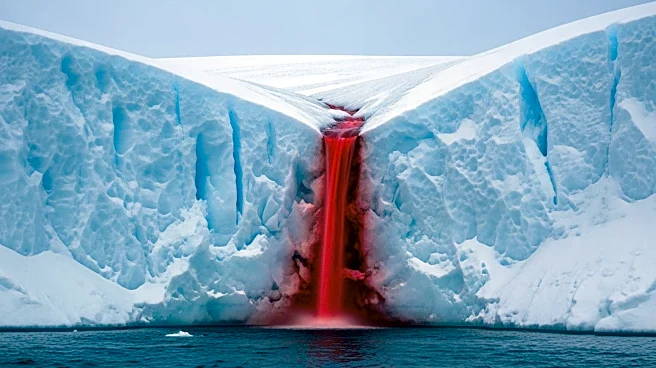
Researchers have finally unraveled the mystery of Antarctica's Blood Falls, a phenomenon where rust-colored water flows from the Taylor Glacier. The study, led by geoscientist Peter T. Doran, reveals that the red hue is due to iron-rich brine released
from beneath the glacier. This brine is linked to shifts in ice pressure, which occur when the glacier moves, causing episodic bursts of brine. The study highlights a hidden ecosystem of microorganisms thriving in extreme conditions without oxygen, using sulfur and iron for energy. This discovery provides new insights into the glacier's dynamics and the complex chemistry of the brine.
Why It's Important?
The findings offer significant insights into the behavior of glaciers and the impact of pressure dynamics on their movement. Understanding these processes is crucial for predicting how glaciers might respond to environmental changes, including climate change. The study also sheds light on the potential for life in extreme environments, which could have implications for the search for life on other planets. The unique ecosystem beneath the glacier demonstrates the adaptability of life in harsh conditions, providing a model for studying similar environments elsewhere in the solar system.
Beyond the Headlines
The study's revelations about the brine's impact on surrounding ecosystems highlight the interconnectedness of environmental systems. The brine's flow can disturb nearby lakes, affecting their temperature and salinity, which in turn impacts microbial life and food chains. These findings emphasize the importance of monitoring and understanding the broader ecological impacts of such phenomena. Additionally, the study underscores the need for continued research into the effects of climate change on polar regions, as these areas are particularly sensitive to environmental shifts.