








What's Happening?
The United States has issued a level four travel advisory against all travel to Uganda due to an Ebola outbreak. This advisory places Uganda in the same category as countries like North Korea, Somalia, Afghanistan, and Russia. Uganda's health minister,
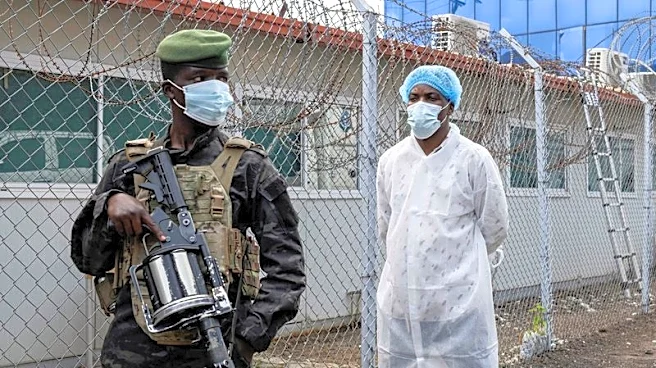
Dr. Chris Baryomunsi, has been actively lobbying for the removal of these restrictions, emphasizing the country's progress in managing the disease. The advisory remains despite Uganda discharging its last confirmed Ebola patient and starting a 42-day countdown to be declared Ebola-free by the World Health Organization. The outbreak in Uganda has resulted in 20 infections and two deaths, significantly impacting tourism, trade, and business.
Why It's Important?
The travel advisory has significant implications for Uganda's economy, particularly its tourism sector, which is a vital source of revenue. The restrictions could deter tourists and investors, leading to economic setbacks. The advisory also highlights the broader issue of how health crises can affect international relations and economic stability. For the U.S., maintaining such advisories reflects a commitment to public health safety, but it also underscores the challenges of balancing health concerns with economic impacts on affected countries.
What's Next?
Uganda is expected to continue its diplomatic efforts to have the travel advisory lifted. This includes engaging with international health organizations and other countries to demonstrate its capability in managing the outbreak. The outcome of these efforts will depend on Uganda's ability to maintain a disease-free status and the global community's response to its lobbying. The situation also calls for ongoing monitoring of Ebola cases in neighboring regions, which could influence future advisories.