






What's Happening?
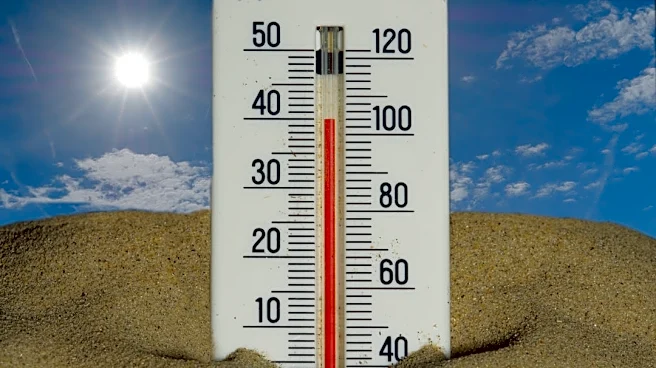
Los Angeles County is experiencing record-level humidity, exacerbating the effects of an ongoing heat wave and raising significant health concerns. Climate scientist Daniel Swain described the current absolute humidity as "very high," reaching levels
rarely seen in the region at any time of year. This unusually moist atmosphere impedes the body's natural cooling mechanism, as sweat does not evaporate as easily, causing individuals to feel hotter and increasing the risk of heat-related illnesses. Public health officials in Los Angeles County have already noted an increase in emergency visits for heat-related illnesses during the summer months. Experts emphasize that the public needs to better understand the dangers posed by the combination of high heat and humidity.
Why It's Important?
The combination of record humidity and intense heat in Los Angeles County poses a serious public health threat, particularly for vulnerable populations. High humidity prevents the body from effectively cooling itself through sweat evaporation, leading to a higher risk of heat exhaustion and heatstroke. This situation highlights the growing impact of climate change on urban environments and the need for robust public health strategies to mitigate heat-related morbidity and mortality. The increased strain on emergency services and healthcare infrastructure during such events can be substantial. Furthermore, it underscores the importance of public awareness campaigns and accessible cooling resources to protect residents, especially those without air conditioning, outdoor workers, and the elderly, from severe health outcomes.
What's Next?
Public health officials in Los Angeles County are issuing health guidance to help residents cope with the extreme conditions. Recommendations include staying hydrated, taking precautions when outdoors by avoiding the hottest hours and wearing light clothing, and keeping homes cool or seeking air-conditioned spaces like cooling centers. The Los Angeles Department of Public Health advises never leaving children or pets in vehicles and checking on high-risk individuals. In cases of confusion, fainting, or high body temperature, residents are urged to call 911 immediately. Dr. David Eisenman, a professor at the David Geffen School of Medicine, suggests 'skin wetting' techniques, such as misting water on the face, neck, and forearms, or soaking clothing in cold water, to aid in cooling.
Beyond the Headlines
The recurring and intensifying heat waves, now compounded by unusual humidity levels in regions like Los Angeles, point to a broader societal challenge in adapting to a changing climate. Beyond immediate health impacts, these events can strain power grids, affect agricultural productivity, and disrupt daily life and economic activity. The long-term implications include potential shifts in population distribution as people seek more temperate climates, and increased investment in resilient infrastructure, such as widespread air conditioning and urban green spaces. There's also an ethical dimension concerning equitable access to cooling resources, as lower-income communities often bear a disproportionate burden of heat-related illnesses due to inadequate housing and lack of access to cooling technologies.