








What's Happening?
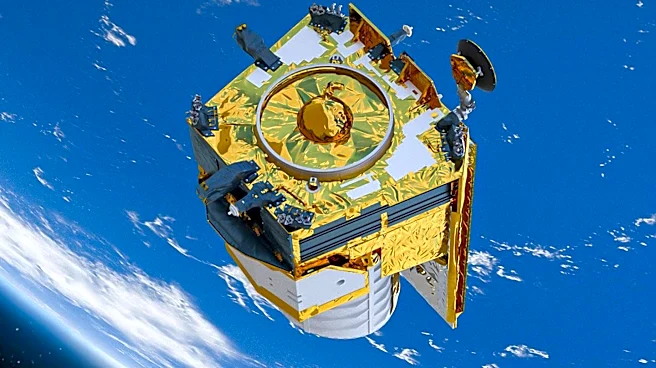
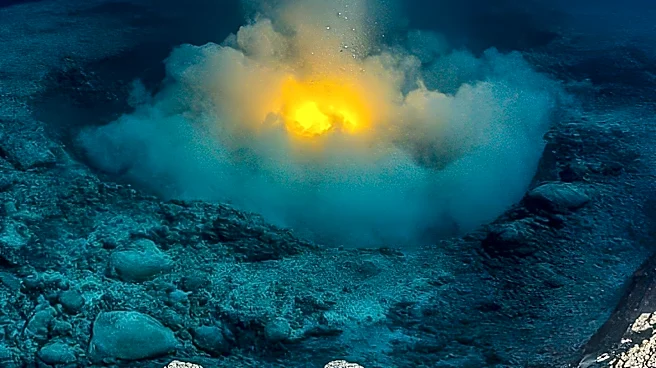
NASA satellites have detected a new underwater volcanic eruption in the Bismarck Sea, north of Papua New Guinea, potentially leading to the formation of a new island. The eruption, occurring along the Titan Ridge, was first indicated by a swarm of small
earthquakes and later confirmed by satellite imagery showing steam and ash plumes. The eruption has produced large areas of discolored water and floating pumice rafts. Scientists are closely monitoring the event to determine if a new island will emerge, which would provide a unique opportunity to study geological and ecological processes in real-time.
Why It's Important?
The potential formation of a new island presents a rare opportunity for scientific study, offering insights into volcanic activity and island ecology. Such events allow researchers to observe the initial stages of land formation and subsequent colonization by plants and animals. This knowledge can enhance understanding of similar processes on Earth and other planetary bodies. Additionally, the eruption highlights the capabilities of satellite technology in monitoring remote and inaccessible regions, demonstrating the importance of space-based observation in advancing geological and environmental sciences.
What's Next?
Scientists will continue to monitor the eruption using satellite data to track changes in the ocean surface and any emerging land. If a new island forms, it will be studied to understand its development and ecological succession. The event may also prompt further exploration of the Bismarck Sea's geological features, which remain poorly understood. This ongoing research could contribute to broader efforts in understanding volcanic activity and its implications for climate and environmental change.