




What's Happening?
The International Rescue Committee (IRC) is calling on leaders from the European Union (EU) and the United Kingdom (UK) to ensure that their renewed cooperation on migration is rooted in international refugee law and promotes shared responsibility. This
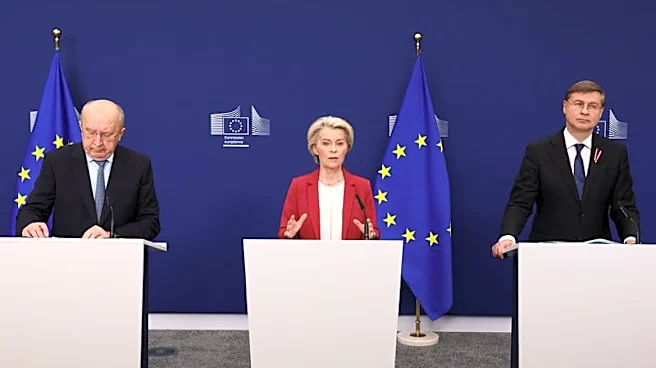
appeal comes as EU and UK leaders prepare to meet in Brussels on November 20. The IRC emphasizes that the upcoming summit provides a crucial opportunity to demonstrate that such cooperation can enhance protection, expand safe pathways, and effectively address displacement, rather than merely shifting responsibility. The organization highlights that both the EU and UK have consistently described each other as like-minded partners committed to common values and a rules-based international order. The IRC believes this summit should be used to further embed these principles into asylum and migration policies. Imogen Sudbery, Executive Director, IRC Belgium, stated that the EU and UK possess significant influence in shaping global responses to conflict and crisis, and should leverage this to lead humanitarian diplomacy and protect civilians.
Why It's Important?
This initiative by the IRC is important because it underscores the critical need for humanitarian principles and international law to guide migration policies between major global powers. By advocating for cooperation grounded in international refugee law, the IRC aims to prevent policies that might compromise the safety and rights of displaced individuals. The focus on expanding safe pathways and promoting shared responsibility could lead to more humane and effective solutions for refugees and host communities. If the EU and UK adopt these recommendations, it could set a precedent for other nations, influencing global migration governance. Conversely, a failure to integrate these principles could exacerbate humanitarian crises, leading to increased vulnerability for migrants and refugees and potentially undermining international legal frameworks designed to protect them. The outcome of this summit could therefore have significant implications for the future of international migration policy and humanitarian aid.
What's Next?
As EU and UK leaders convene on November 20, the IRC's recommendations will be a key point of consideration for their discussions on migration cooperation. The summit's agenda also includes deepening cooperation on conflict and crisis response, particularly concerning Russia’s war against Ukraine, the Middle East, and broader security and defense issues. The IRC expects both entities to coordinate diplomatic efforts to protect civilians, uphold international humanitarian law, and maintain humanitarian and development funding in areas with rising needs. The organization will likely continue to monitor the implementation of any agreements made during the summit, advocating for policies that prioritize human rights and international law in migration and humanitarian responses. Future actions will depend on the commitments made by EU and UK leaders and their subsequent policy implementations.
Beyond the Headlines
The IRC's call extends beyond immediate policy adjustments, touching upon the ethical and moral dimensions of international relations. By urging the EU and UK to measure migration cooperation not just by reduced arrivals but by its impact on saving lives and upholding rights, the IRC challenges a narrow, security-focused approach to migration. This perspective highlights the long-term societal implications of migration policies, emphasizing the importance of integration and robust refugee protection. The emphasis on joint action in conflict and crisis response also points to the interconnectedness of global challenges, where humanitarian crises often fuel migration. This broader view suggests that effective migration management requires addressing root causes of displacement, such as conflict and instability, through coordinated international efforts and sustained humanitarian funding.