





What's Happening?
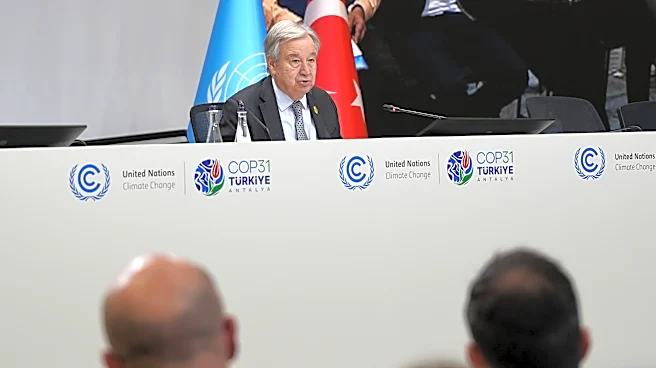
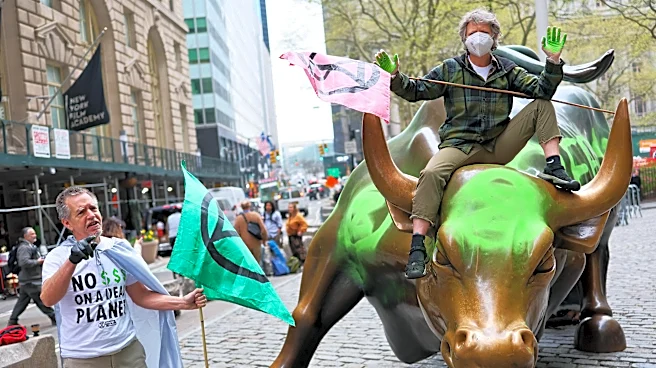
During the COP31 climate talks in Antalya, Turkey, thousands of environmental activists from various civil society organizations protested, calling for climate justice and accountability from financial institutions. These activists, including those from 350.org
and the StopEacop coalition, highlighted the significant role banks play in enabling large-scale fossil fuel projects. Specifically, they condemned projects like the East African Crude Oil Pipeline (Eacop), which runs through Uganda and Tanzania, and gas fields in Mozambique, arguing that such initiatives lead to environmental degradation, biodiversity loss, and the displacement of over 100,000 people. Zaki Mamdoo, campaign coordinator of the StopEacop coalition, emphasized that these mega-projects are only possible due to an 'unholy alliance' between industrial capitalists, the fossil fuel industry, and financial institutions like Standard Bank. The activists are demanding grant-based climate finance, a full commitment to renewables without fossil fuel loopholes, and the removal of industry lobbyists from COP negotiations, asserting that real climate action is being undermined by closed-door negotiations and corporate interests.
Why It's Important?
The protests at COP31 underscore a growing global movement demanding that financial institutions be held responsible for their investments in fossil fuel projects. This push for accountability could significantly impact the U.S. financial sector, particularly banks and investment firms that fund similar projects internationally. If successful, these demands could lead to increased scrutiny, regulatory pressures, and divestment campaigns targeting U.S. financial entities involved in fossil fuel financing. This shift could force U.S. banks to re-evaluate their portfolios, potentially redirecting capital towards renewable energy and sustainable development, thereby influencing global energy transitions. The emphasis on grant-based climate finance over debt-inducing loans also challenges traditional funding models, which could alter how developing nations access capital for climate initiatives and potentially reduce their financial dependence on institutions that have historically supported fossil fuel extraction.
What's Next?
The ongoing pressure from activists at international climate summits like COP31 is likely to intensify, pushing for more concrete commitments from financial institutions and governments. Future climate negotiations may see increased demands for legally binding frameworks that hold financiers accountable for the environmental and social impacts of their investments. This could lead to new international agreements or national regulations aimed at restricting funding for fossil fuel projects. Additionally, civil society organizations are expected to continue their grassroots efforts, building collective power outside formal processes to advocate for systemic change. The focus will remain on ensuring that climate finance is equitable and that the transition to renewable energy is not hindered by corporate lobbying or inadequate due diligence from financial institutions.
Beyond the Headlines
The activists' critique extends beyond mere environmental concerns, touching upon deeper issues of neocolonialism, economic exploitation, and human rights. By highlighting the displacement of communities and the disregard for cultural values in regions like East Africa, the movement exposes the ethical dimensions of global finance and resource extraction. The call to remove industry lobbyists from negotiations points to a fundamental distrust in the current political and economic structures governing climate action, suggesting that true justice requires a rebalancing of power. This perspective implies that climate collapse is not just an environmental crisis but a symptom of broader systemic inequalities, necessitating a radical reimagining of global governance and economic models to prioritize people and the planet over capital accumulation.