



What's Happening?
Water bills across the United States have increased by an average of 62% over the past decade, significantly outpacing both inflation and income growth, according to an October analysis by Food & Water Watch. This surge is particularly affecting low-income
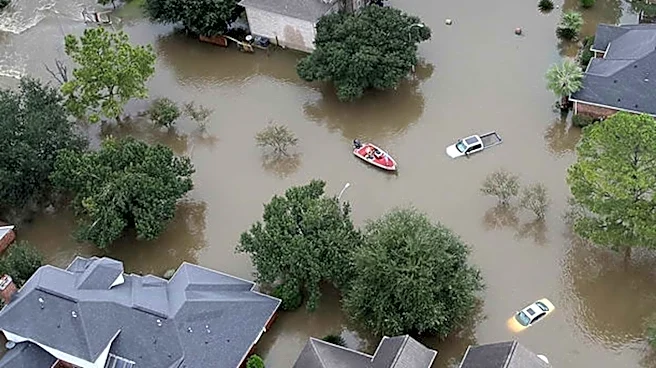
households, with water bills becoming unaffordable in 93% of 500 water systems examined in the report, which serve approximately 45% of the U.S. population. The rising costs are attributed to several factors, including droughts, extreme weather damaging infrastructure, increased demand from data centers and large-scale animal farming, and agricultural pollution raising water treatment expenses. The report also highlights that privately owned water systems charged households 67% more annually in 2025 compared to publicly owned systems. Geographic disparities are notable, with West Virginia having the highest average annual bills at over $1,380, while Idaho's were around $290. In some states like Louisiana, Maryland, and West Virginia, water costs rose twice as fast as household incomes, and nearly five times faster in New Hampshire. Low-income households in Puerto Rico faced particularly severe costs, with typical water bills consuming 20% of their income.
Why It's Important?
The escalating cost of water poses a significant threat to the financial stability and public health of millions of U.S. households. When faced with unaffordable water bills, families may be forced to cut back on essential expenses such as food, medication, or healthcare, potentially leading to adverse physical and mental health outcomes. Furthermore, the risk of water shut-offs for struggling households jeopardizes sanitation and basic living standards. This situation exacerbates existing inequalities, disproportionately affecting low-income communities and potentially widening health disparities. The strain on household budgets can lead to increased debt and financial insecurity, impacting overall economic well-being. The findings also underscore the broader challenges of aging infrastructure, climate change impacts on water resources, and the economic implications of private versus public utility ownership, all of which contribute to the rising costs and the burden on consumers.
What's Next?
Addressing the issue of surging water bills will likely require a multi-faceted approach involving policy changes, infrastructure investment, and potential regulatory reforms. Policymakers may consider implementing programs to assist low-income households with water affordability, similar to energy assistance programs. There could be increased pressure on federal and state governments to invest in upgrading and maintaining water infrastructure to mitigate the impact of droughts and extreme weather, which currently drive up costs. Discussions around the regulation of privately owned water systems may also intensify, given their higher charges compared to public systems. Additionally, there might be a push for more sustainable water management practices to reduce demand from industries like data centers and large-scale animal farming, and to combat agricultural pollution. Public health advocates and community organizations are expected to continue raising awareness and advocating for solutions to ensure equitable access to affordable and safe drinking water for all U.S. residents.
Beyond the Headlines
The issue of rising water bills extends beyond immediate financial strain, touching upon fundamental questions of environmental justice and the right to essential services. The disproportionate impact on low-income households and specific geographic regions highlights systemic inequities in access to resources. The reliance on aging infrastructure, coupled with the increasing frequency and intensity of climate-related events, underscores the urgent need for long-term, resilient solutions. This situation also brings into focus the debate over the privatization of essential services, with the report indicating higher costs under private ownership. The potential for water shut-offs raises ethical concerns about denying a basic human need due to economic hardship. Ultimately, the trend of surging water bills reflects a broader societal challenge of balancing economic development, environmental sustainability, and equitable access to vital public health resources in the face of evolving environmental and economic pressures.