



What's Happening?
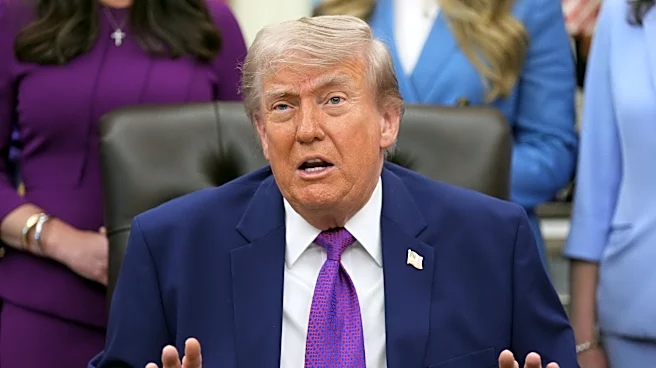
President Donald Trump has proposed a suspension of the federal gas tax as a measure to alleviate the financial burden on American consumers facing soaring energy prices due to the ongoing conflict in Iran. This proposal, which requires congressional
approval, is part of a series of government interventions aimed at addressing the economic fallout from the war. Since the conflict began, the price of Brent crude oil has surged, leading to a significant increase in U.S. gas prices, which now average $4.50 per gallon. The federal gas tax currently stands at 18.3 cents per gallon for gasoline and 24.3 cents per gallon for diesel. Trump's proposal comes as part of broader efforts, including the release of crude oil from the Strategic Petroleum Reserve and easing of certain fuel regulations, to stabilize the market.
Why It's Important?
The proposed suspension of the federal gas tax is significant as it directly impacts the cost of fuel for American consumers, potentially providing financial relief amid rising prices. However, the suspension could also lead to a reduction in revenue for the Highway Trust Fund, which finances road and public transport improvements. This poses a challenge as the fund already faces declining revenue due to inflation and improved fuel efficiency. The proposal has garnered mixed reactions, with some lawmakers expressing support while others remain skeptical about its effectiveness in reducing consumer prices. The outcome of this proposal could influence public opinion and political dynamics, especially with the upcoming midterm elections.
What's Next?
The next steps involve congressional deliberation on the proposed gas tax suspension. If approved, the challenge will be ensuring that the savings are passed on to consumers rather than benefiting oil companies. Additionally, any potential relief from the tax suspension could be offset by further increases in global oil prices. The decision will also have implications for the Highway Trust Fund, necessitating alternative funding solutions to maintain infrastructure projects. The political and economic ramifications of this proposal will be closely monitored as stakeholders, including lawmakers and industry leaders, weigh in on the potential impacts.