
What's Happening?
Ukrainian forces, led by Commander Robert 'Madyar' Brovdi of the Unmanned Systems Forces, executed a drone strike on a Russian FSB facility in occupied Donetsk. The operation, part of Ukraine's broader
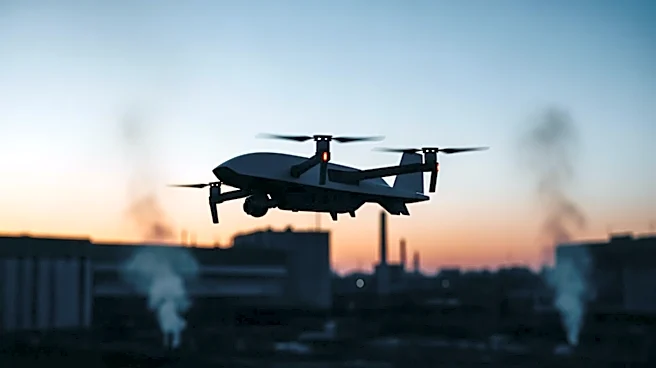
deep-strike campaign, targeted the FSB's Mobile Operations Directorate, a unit linked to Russia's counterintelligence service. The strike, carried out on April 22, involved eight FP-2 drones equipped with 60-100kg warheads, resulting in the death of 12 Russian personnel and injuries to 15 others. This attack is part of Ukraine's strategy to disrupt Russian command and control structures in occupied territories, focusing on coordination nodes rather than frontline positions.
Why It's Important?
The strike signifies a strategic shift in Ukraine's military tactics, emphasizing the use of long-range drones to target critical Russian infrastructure. This approach aims to weaken Russian operational capabilities in occupied regions, potentially altering the dynamics of the conflict. The successful execution of such operations could bolster Ukraine's defense posture and influence international support. Additionally, the incident highlights the evolving nature of warfare, where unmanned systems play a crucial role, potentially prompting other nations to reassess their military strategies and investments in drone technology.
What's Next?
Ukraine is likely to continue its deep-strike campaign, leveraging drone technology to target Russian military and security infrastructure. This could lead to increased tensions and retaliatory actions from Russia. The international community may respond with heightened diplomatic efforts to de-escalate the situation. Additionally, the success of these operations may encourage further development and deployment of advanced drone systems by Ukraine and its allies.