





What's Happening?
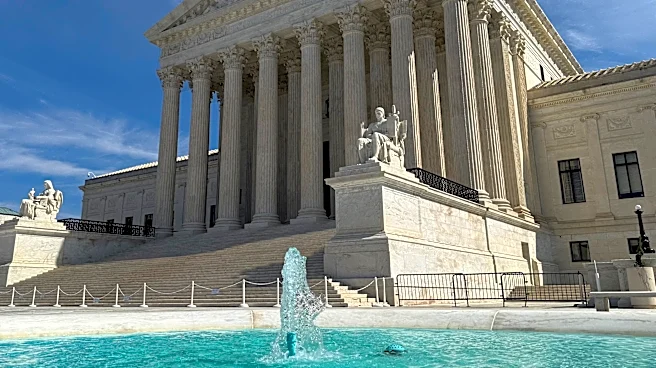
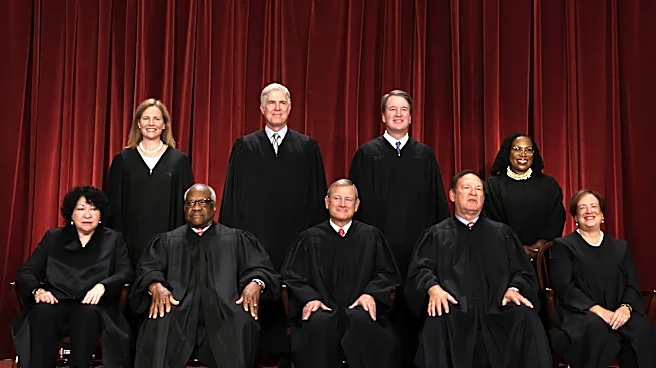
As the United States approaches its 250th anniversary, Supreme Court Justices Brett Kavanaugh, Neil Gorsuch, and Amy Coney Barrett are highlighting the critical role of civic education in maintaining the nation's founding freedoms. In interviews filmed
by the Federalist Society, these conservative justices stressed the importance of understanding American history, constitutional principles, and active participation in government. Justice Gorsuch emphasized that the rights granted in the Constitution and the ideals of the Declaration of Independence, while seemingly natural now, were revolutionary in 1776. He noted that these concepts, such as equality and God-given rights, do not originate from government but from a higher source. Justice Kavanaugh underscored the fundamental nature of the education system in preserving and improving the republic over the next 250 years, advocating for continuous learning and participation in the system of government. Justice Barrett focused on the Declaration of Independence, urging Americans to view themselves as active participants in the 'American project,' drawing parallels to the mutual pledge made by the document's signatories.
Why It's Important?
The justices' remarks underscore a growing concern about civic literacy in the U.S. and its potential impact on the nation's democratic institutions. A decline in understanding foundational American principles could lead to decreased civic engagement, making the populace more susceptible to misinformation and less equipped to make informed decisions about their governance. This emphasis on education is particularly relevant as the country faces increasing political polarization and challenges to democratic norms. By advocating for robust civics education, the justices are implicitly calling for a more informed and engaged citizenry, which is crucial for the long-term stability and health of the republic. The call for renewed focus on American history and values aims to foster a shared understanding of national identity and purpose, potentially mitigating societal divisions and strengthening the collective commitment to democratic ideals.
What's Next?
The Federalist Society's 2026 National Lawyers Convention, which will spotlight '250 Years of American Exceptionalism,' serves as a platform for these discussions to reach a broader audience within the conservative legal movement. The justices' statements are likely to fuel ongoing debates about the content and priority of civics education in schools and public discourse. While Justice Sonia Sotomayor, in a separate event, acknowledged the current challenges facing the U.S. and the 'hard work' required to get back on an 'even keel,' the collective emphasis from the Supreme Court justices suggests a bipartisan recognition of the need for greater civic understanding. This could lead to increased advocacy for educational reforms, curriculum development, and public awareness campaigns aimed at enhancing civic literacy across all age groups.
Beyond the Headlines
The justices' call for civic education extends beyond mere historical knowledge; it touches upon the ethical and cultural dimensions of American identity. Justice Gorsuch's religious framing of rights and Justice Barrett's emphasis on the 'mutual pledge' in the Declaration of Independence highlight a deeper philosophical undercurrent to their concerns. This perspective suggests that the preservation of American freedoms is not solely a legal or political endeavor but also a moral and communal responsibility. The discussion implicitly raises questions about how a diverse society can maintain a shared understanding of its founding principles and values, especially in an era of rapid social and technological change. The long-term implication is a potential re-evaluation of how American exceptionalism is taught and understood, moving beyond a purely celebratory narrative to one that emphasizes ongoing civic duty and the continuous effort required to uphold democratic ideals.