



What's Happening?
Representative Brian Jack (GA-03) is part of a coalition of House Republicans, led by Rep. Andrew Clyde (R), that has filed an amicus brief urging the Supreme Court of the United States to declare bans on AR-15s and similar rifles unconstitutional. This
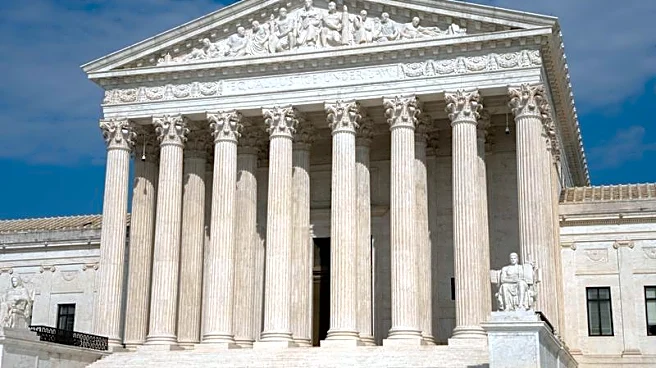
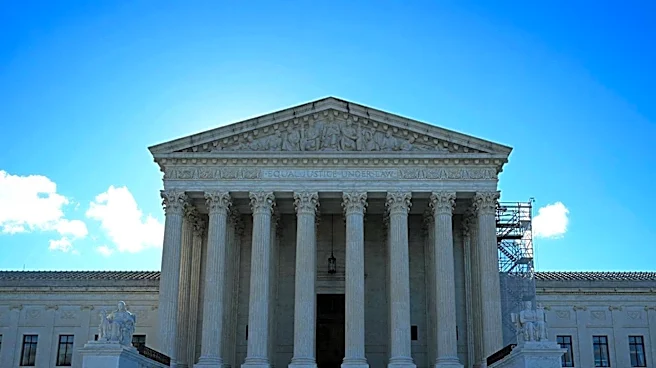
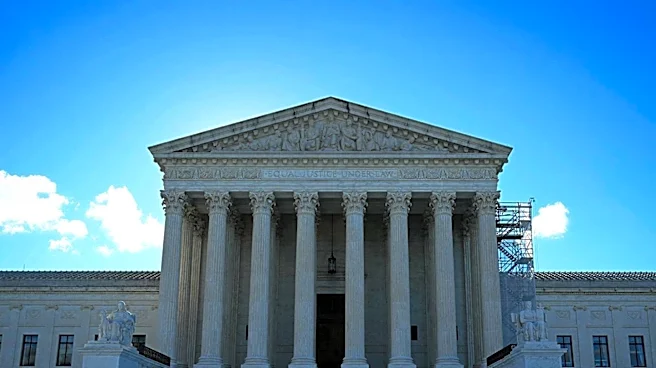
brief comes as the Supreme Court has agreed to hear two consolidated cases, Grant v. Higgins and Viramontes v. Cook County, which challenge lower court rulings upholding such firearm bans. The cases specifically address whether AR-15 ownership is protected under the Second and Fourteenth Amendments. The Republican coalition argues that the Second Amendment clearly protects the right to own semi-automatic rifles, including AR-15s, which are widely used by law-abiding Americans. The brief references historical documents such as the Federalist Papers, the Militia Acts of 1792 and 1903, and commentaries from William Blackstone, alongside Supreme Court precedents like Miller (1939) and Heller (2008), to support their position that military small arms in common use, like the AR-15, are central to the Second Amendment right.
Why It's Important?
This amicus brief is a significant development in the ongoing national debate over gun control and Second Amendment rights. A Supreme Court ruling in favor of the Republican coalition's argument could have far-reaching implications for firearm legislation across the United States, potentially overturning existing bans on AR-15s and similar rifles at state and local levels. This would represent a major victory for gun rights advocates and a setback for those pushing for stricter gun control measures. The involvement of over 60 House Republicans, including Representative Jack, underscores the political weight and bipartisan division surrounding this issue. The outcome of these cases will directly impact gun manufacturers, retailers, and millions of gun owners, while also shaping public safety discussions and the legislative landscape regarding firearms for years to come. It highlights the judiciary's critical role in interpreting constitutional rights in the context of modern weaponry.
What's Next?
The Supreme Court will proceed with hearing the consolidated cases of Grant v. Higgins and Viramontes v. Cook County. The amicus brief submitted by Representative Jack and his colleagues will be considered by the justices as they deliberate on the constitutionality of AR-15 bans. A decision from the Supreme Court is anticipated, which will either uphold the lower court rulings, thereby maintaining existing bans, or overturn them, leading to the invalidation of such prohibitions nationwide. Regardless of the outcome, the ruling is expected to ignite further political and legal battles. Gun rights organizations will likely intensify their advocacy if bans are upheld, while gun control advocates will push for new legislative efforts if bans are struck down. The decision will set a precedent for future firearm regulations and could influence upcoming elections as candidates take stances on the Second Amendment.
Beyond the Headlines
The legal challenge to AR-15 bans extends beyond mere gun ownership, touching upon fundamental interpretations of constitutional rights and the balance between individual liberties and public safety. The brief's reliance on historical texts and precedents like the Militia Acts and the writings of William Blackstone highlights a broader philosophical debate about the original intent of the Second Amendment in a contemporary context. This case could redefine what constitutes 'common use' and 'reasonable relationship to the citizen-militia tradition' in the 21st century, potentially impacting how other constitutional rights are interpreted in light of technological advancements. The decision will also reflect the ideological leanings of the current Supreme Court, further solidifying its stance on contentious social and political issues, and potentially influencing the composition of future courts through presidential appointments.