



What's Happening?
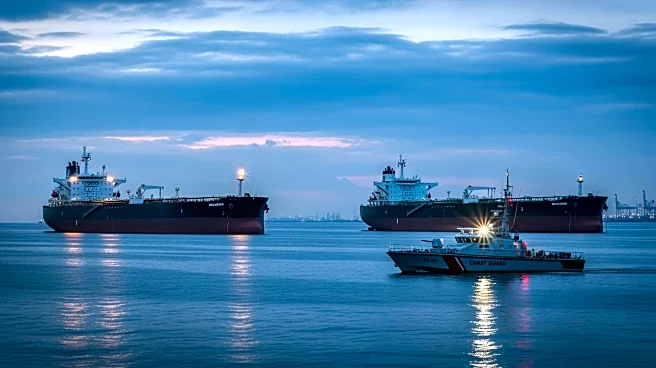
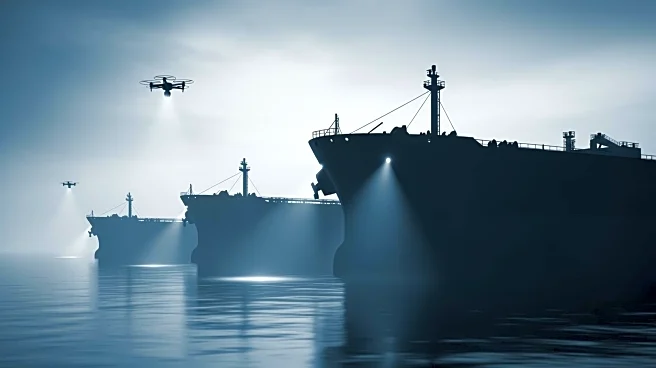
India has seized three oil tankers that were under U.S. sanctions and linked to Iran, as part of efforts to curb illicit trade in its maritime zone. The seizures were confirmed by a source following a deleted post by Indian authorities. The tankers, identified
as Stellar Ruby, Asphalt Star, and Al Jafzia, were intercepted about 100 nautical miles west of Mumbai. These vessels frequently changed identities to evade law enforcement, and their owners are reportedly based overseas. The Indian Coast Guard has increased its surveillance, deploying approximately 55 ships and 10 to 12 aircraft for round-the-clock monitoring. The U.S. Office of Foreign Assets Control had previously sanctioned these vessels, which are involved in complex ownership structures and mid-sea transfers to obscure the origin of their cargoes.
Why It's Important?
The seizure of these tankers highlights the ongoing geopolitical tensions surrounding oil trade, particularly involving Iran, which is under U.S. sanctions. This action by India underscores its commitment to aligning with U.S. policies, especially after recent improvements in U.S.-India relations. The move could impact global oil markets, as sanctioned oil is often sold at deep discounts, affecting pricing and supply chains. Additionally, it reflects India's strategic role in enforcing international sanctions and maintaining maritime security. The increased surveillance and enforcement actions may deter future illicit activities in the region, potentially stabilizing trade routes and ensuring compliance with international laws.
What's Next?
Following the seizure, the tankers have been escorted to Mumbai for further investigation. It is likely that India will continue to enhance its maritime security measures to prevent similar incidents. The U.S. and India may further collaborate on intelligence sharing and enforcement strategies to address illicit trade. The outcome of the investigation could lead to legal actions against the owners of the seized vessels. Additionally, this incident may prompt other countries to review their maritime security protocols and cooperation with international sanctions.
Beyond the Headlines
The incident raises questions about the effectiveness of international sanctions and the methods used by sanctioned entities to circumvent them. It also highlights the challenges faced by countries in enforcing maritime laws and the need for international cooperation. The use of complex ownership structures and false documentation by these tankers points to a broader issue of regulatory loopholes that need to be addressed. This situation may lead to discussions on strengthening international maritime regulations and improving transparency in the shipping industry.