
What's Happening?
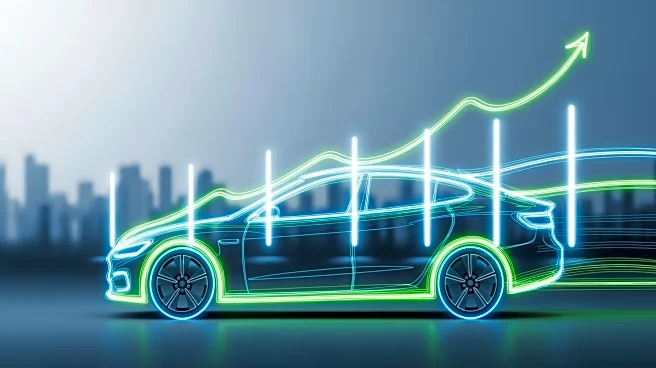
Colombia's electric vehicle (EV) market has experienced significant growth, reaching a 12.9% market share in December 2025, with sales increasing by 80% compared to the previous year. This surge in EV sales is attributed
to events like Bogota's Automobile Hall and the introduction of more affordable models such as those from Tesla. Despite this growth, the country faces challenges with charging infrastructure, as the government has no plans to publicly fund EV chargers. The private sector is stepping in to fill this gap, but the development of charging stations is lagging behind the rapid increase in EV sales. Additionally, Colombia's motorcycle market remains dominated by internal combustion engine vehicles, with over one million motorcycles sold in 2025, mostly from local production.
Why It's Important?
The growth of Colombia's EV market is a significant step towards reducing the country's reliance on fossil fuels and decreasing carbon emissions. However, the lack of sufficient charging infrastructure could hinder the adoption of EVs, as potential buyers may be deterred by the inconvenience of charging. The private sector's involvement in developing charging stations is crucial, but without government support, the pace of infrastructure development may not keep up with the demand. The dominance of internal combustion engine motorcycles highlights a sector that still needs to transition to cleaner energy, which could impact Colombia's overall environmental goals.
What's Next?
As Tesla and other affordable EV models enter the Colombian market, a potential price war could ensue, driving down the cost of EVs and making them more accessible to consumers. This could further accelerate the shift from internal combustion engines to electric vehicles. The private sector's continued investment in charging infrastructure will be vital to support this transition. Monitoring the impact of these developments on the overall vehicle market and fuel consumption will be essential to assess Colombia's progress towards a more sustainable transportation system.
Beyond the Headlines
The transition to electric vehicles in Colombia could have broader implications for the country's economy and energy policies. As the demand for EVs grows, there may be increased pressure on the government to support infrastructure development and provide incentives for EV adoption. Additionally, the shift could influence Colombia's energy grid and fuel import strategies, potentially leading to a reevaluation of energy policies to accommodate the rising demand for electricity and decrease reliance on imported fuels.