



What's Happening?
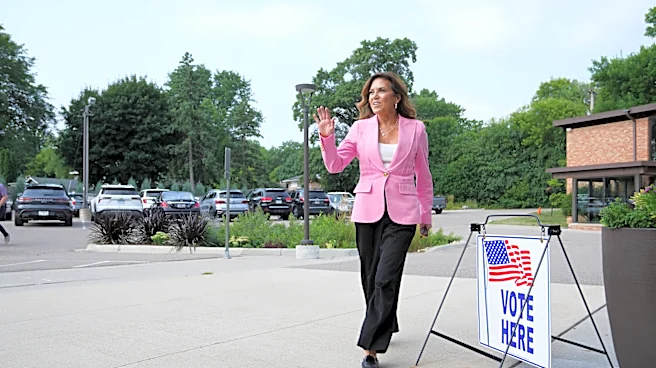
Iowa Representative Ashley Hinson, currently a Republican candidate for the U.S. Senate, has missed nearly 200 votes in Congress since joining the House in 2021. This includes 163 committee votes and 33 floor votes. Some of these absences are attributed
to her having COVID-19 in January 2022 and April 2026, but many remain unexplained. Notably, Hinson missed a vote to increase funding for the Internet Crimes Against Children Task Force, aimed at combating AI-generated child pornography. She also missed votes related to reducing violent crime, such as funding for the Violence Against Women Act and transitional housing grants for domestic abuse victims. Additionally, Hinson was absent for votes on healthcare issues, including addressing doctor shortages in the Veterans Affairs system and funding nutrition programs for seniors. Her absences have sparked criticism, especially as she campaigns against Democratic state Rep. Josh Turek in a closely watched Senate race.
Why It's Important?
Hinson's missed votes are significant as they highlight potential gaps in her legislative priorities and commitment, which could impact her Senate campaign. Her absences on critical issues like child protection, healthcare, and crime prevention may influence voter perception, especially in a high-stakes election. The missed votes could be leveraged by her opponent, Josh Turek, to question her dedication to representing Iowa's interests. Furthermore, her decision to attend a fundraiser instead of voting on defense appropriations may raise ethical concerns about prioritizing campaign activities over legislative duties. This situation underscores the importance of accountability and transparency for elected officials, particularly those seeking higher office.
What's Next?
As the Senate race progresses, Hinson may face increased scrutiny over her voting record and campaign priorities. Voters and political analysts will likely examine her past legislative performance to assess her suitability for the Senate role. Hinson's campaign strategy may need to address these concerns directly, possibly by providing explanations for her absences and outlining her future legislative agenda. The outcome of this race could hinge on how effectively she manages these criticisms and communicates her commitment to Iowa's constituents.