







What's Happening?
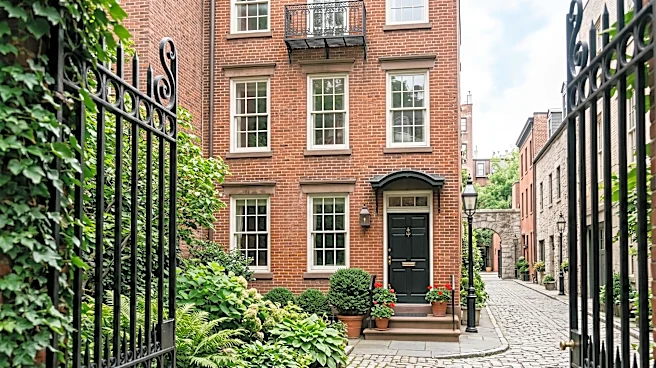
The Manhattan townhouse once utilized as a studio by renowned artists Jackson Pollock and Lee Krasner in the early 1950s has been listed for sale with an asking price of $7.99 million. Located at 9 MacDougal Alley, a private gated mews in New York City,
the property is characterized by its significant natural light, featuring a large wall of windows and a double-height ceiling with an artist's skylight. This architectural feature dates back to when Gertrude Vanderbilt Whitney, founder of the Whitney Museum, had her studio nearby. The roughly 1,500-square-foot building, which Pollock and Krasner borrowed from painter Alfonso Ossorio in 1949 and 1950, is being offered for sale for the first time since December 1988. The residence boasts old-world interiors, including beamed ceilings, hardwood floors, a wood-burning fireplace, and a garden with mature plantings. It is marketed as either a single-family home or a live-work space, featuring two bedrooms and two kitchens, along with a second-floor balcony and a roof suitable for decking and landscaping. MacDougal Alley, established in 1833, historically housed carriage houses for mansions on Washington Square North.
Why It's Important?
The listing of Jackson Pollock and Lee Krasner's former studio carries significant cultural and historical importance, particularly within the American art world. Pollock and Krasner were pivotal figures in the Abstract Expressionist movement, and their workspace is a tangible link to a transformative period in U.S. art history. The property's unique features, such as the artist's skylight and its location in a historic, secluded mews, highlight the specific environments that fostered artistic innovation in mid-20th century New York City. For art historians, collectors, and enthusiasts, this sale offers a rare opportunity to acquire a piece of American artistic heritage. The high asking price reflects not only the prime Manhattan real estate market but also the premium placed on properties with such a rich cultural provenance. The sale could also influence the valuation of other historically significant artist studios in urban centers, underscoring the increasing demand for properties that blend architectural uniqueness with cultural legacy. Its potential as a live-work space also speaks to the enduring appeal of such environments for contemporary creatives.
What's Next?
The property will remain on the market, with Mae Bagai and Jonathan Hettinger of Sotheby’s International Realty handling the listing. Potential buyers will likely include art collectors, history enthusiasts, or individuals seeking a unique residence with a significant cultural backstory. Given its historical importance and prime location, the sale process may attract considerable attention from both real estate and art communities. The new owner will face decisions regarding the preservation of the studio's historical integrity versus potential modern renovations. The property's designation as a single-family home or live-work space offers flexibility, but any significant alterations would need to consider its legacy. The sale could also spark renewed interest in the history of MacDougal Alley and similar 'secret streets' in New York City, potentially leading to increased property values or preservation efforts in these unique urban enclaves.
Beyond the Headlines
The sale of Pollock and Krasner's former studio transcends a typical real estate transaction, touching upon themes of artistic legacy, urban preservation, and the commodification of cultural history. The property's existence in a 'secret street' like MacDougal Alley highlights the hidden layers of New York City's urban fabric, where historical enclaves offer a glimpse into past eras. The emphasis on natural light and the artist's skylight underscores the practical needs and aesthetic values of artists, revealing how physical spaces can profoundly influence creative output. This listing also raises questions about the future of historically significant artist studios in rapidly developing urban environments. As cities evolve, the preservation of such spaces becomes crucial for maintaining cultural memory and providing inspiration for future generations. The high value placed on this property reflects a broader societal appreciation for the intersection of art, history, and architecture, suggesting a growing market for properties that offer more than just living space but also a connection to a significant cultural narrative.