



What's Happening?
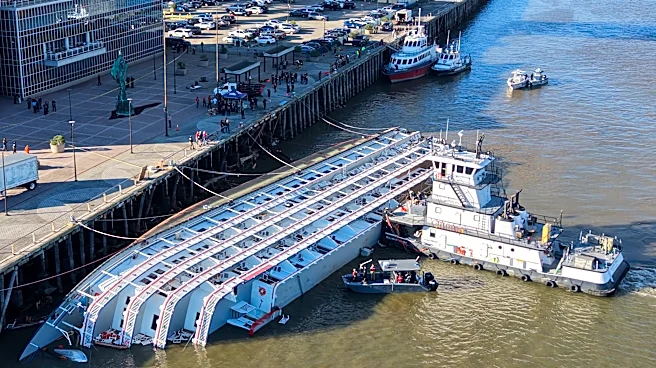
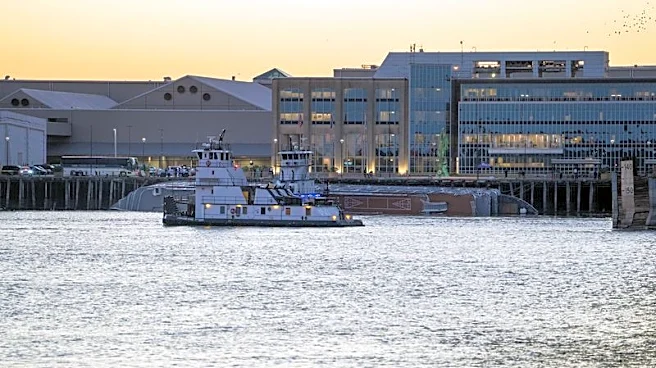
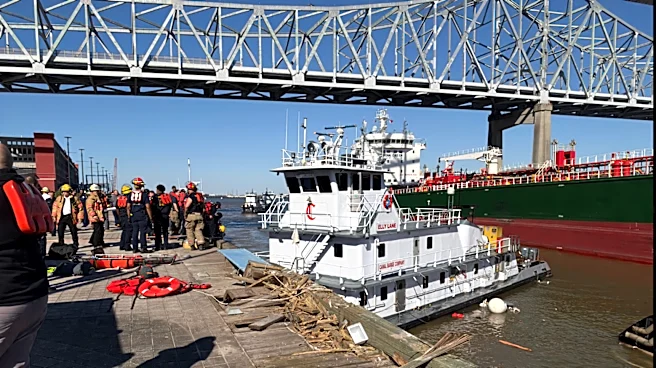
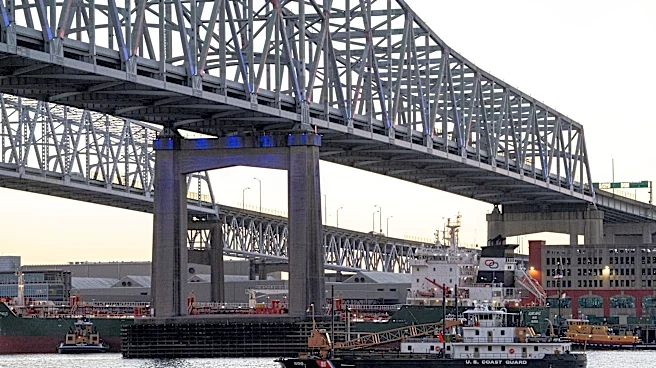
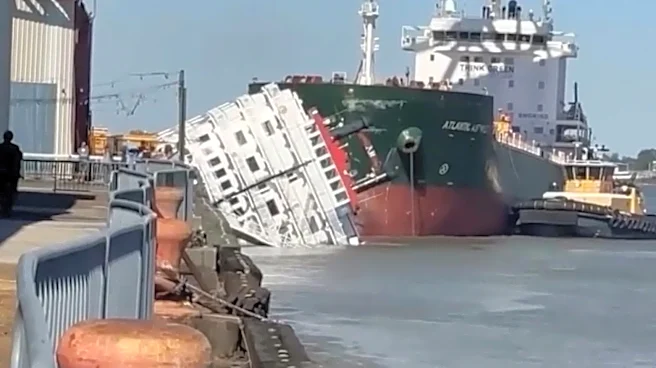
Federal authorities are investigating a collision that occurred on the Mississippi River in New Orleans, where the Atlantic Asphalt tanker collided with the docked American Heritage riverboat. The incident, which took place on a Friday, resulted in over
30 injuries and caused the riverboat to capsize within 22 minutes. The National Transportation Safety Board (NTSB) is focusing its investigation on a 'steering casualty' experienced by the Atlantic Asphalt. Preliminary data from the tanker's voyage data recorder (VDR) indicates that its rudder remained to starboard, causing the vessel to veer towards the east bank of the river before broadsiding the American Heritage. The tanker had 19 crew members, while the riverboat carried 140 passengers and 50 crew members. All individuals have been accounted for, with New Orleans Mayor Helena Moreno calling it a 'miracle on the Mississippi.'
Why It's Important?
This incident highlights critical safety concerns within maritime transportation, particularly regarding vessel steering systems and emergency protocols on major waterways like the Mississippi River. The NTSB's investigation into the steering malfunction of the Atlantic Asphalt is crucial for identifying the root cause and preventing similar accidents in the future. The collision's impact on over 30 individuals and the capsizing of a riverboat underscore the potential for severe consequences when such systems fail. Furthermore, the Port of New Orleans has filed a federal lawsuit against the tanker's owner and safety management company, seeking at least $1 million in damages, which could have significant financial implications for the involved parties and potentially influence maritime insurance and liability standards.
What's Next?
The NTSB's investigation into the cause of the tanker's rudder malfunction is ongoing. Investigators will continue to analyze the recovered VDR data and other evidence to determine why the steering system failed. The federal lawsuit filed by the Port of New Orleans against Nave Shipping SA and Thome Ship Management Pte, Ltd. will proceed, with the court having already issued a warrant giving federal officials control of the tanker. This legal action seeks to enforce a lien against the tanker and potentially lead to its seizure and sale to cover claimed damages. Thome Ship Management has stated its full cooperation with local authorities. The findings of the NTSB investigation could lead to new safety regulations or operational guidelines for tankers and other vessels operating on U.S. waterways.
Beyond the Headlines
The collision raises broader questions about the safety and maintenance standards of international shipping vessels operating in U.S. waters. The fact that the tanker is owned by a Liberian-registered company, a subsidiary of a Chinese state-owned conglomerate, and managed by a Singaporean company, introduces complexities regarding international maritime law and accountability. The incident could prompt a review of oversight mechanisms for foreign-flagged vessels and the enforcement of international safety management codes. The 'miracle on the Mississippi' where all individuals were accounted for, despite the severity of the collision, also highlights the effectiveness of emergency response efforts and the resilience of maritime safety protocols, even when mechanical failures occur.