
What's Happening?
The forestry sector in West Africa is grappling with the challenges of managing rubber tree plantations, as highlighted by historical accounts of plantation management. Rubber trees, primarily grown for latex,
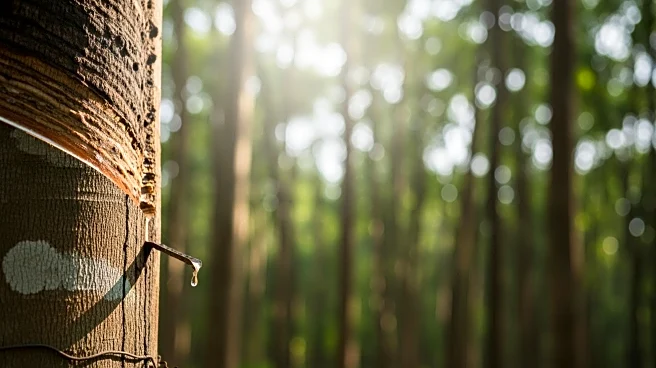
are planted in monocultures similar to timber plantations. The management of these plantations involves significant investment and long-term planning, with trees typically standing for around 40 years. The process includes an initial lag phase before tapping begins, which continues until the trees are exhausted. The plantations face various natural and man-made challenges, such as wild weather and fires, which can cause significant damage to the trees. Efforts to mitigate these damages include innovative management strategies, although not all are successful. Additionally, the export of rubber products has faced issues due to wood-boring beetles found in shipping crates, leading to impoundments by U.S. port authorities.
Why It's Important?
The management of rubber tree plantations is crucial for the economic stability of regions dependent on rubber production. The challenges faced by these plantations, such as natural disasters and pest infestations, can significantly impact production and export capabilities. The impoundment of rubber shipments due to pest issues highlights the importance of effective pest management and quality control in maintaining international trade relations. The economic implications extend to the U.S., where rubber imports are essential for various industries. The historical context of plantation management also underscores the need for sustainable practices and innovation in addressing environmental and logistical challenges.
What's Next?
Future steps for the forestry sector in managing rubber plantations may involve adopting more sustainable and resilient practices to mitigate the impact of natural disasters and pest infestations. This could include investing in research and development for better pest control methods and exploring alternative materials for shipping to prevent infestations. Additionally, international collaboration and knowledge exchange could play a role in enhancing the management strategies of rubber plantations. The sector may also need to address regulatory challenges and ensure compliance with international trade standards to maintain market access.
Beyond the Headlines
The challenges faced by rubber plantations in West Africa reflect broader issues in global forestry management, including the balance between economic development and environmental sustainability. The historical reliance on monocultures and the impact of climate change on plantation resilience are critical considerations for the future. The story also highlights the importance of maintaining research and expertise in tropical agriculture and forestry, which have been diminished over the years. The closure of research organizations and the loss of expertise could have long-term implications for the sector's ability to innovate and adapt to changing conditions.