

What's Happening?
President Trump declared an 'energy emergency' on January 20 of the previous year, prioritizing hydropower alongside coal and other fossil fuels. This led to the U.S. Department of Energy releasing a report highlighting the economic benefits of integrating
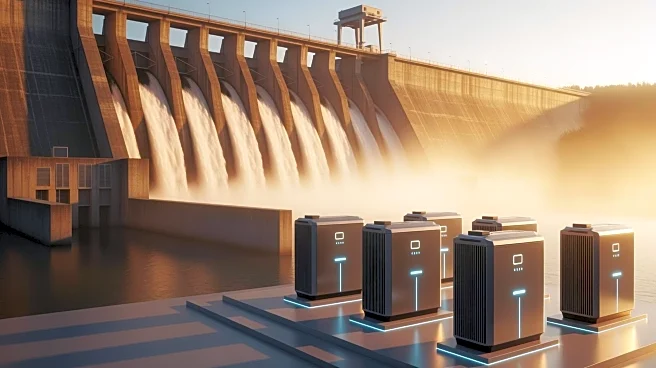
battery energy storage systems (BESS) with hydropower facilities. The report, from the Pacific Northwest National Laboratory (PNNL), suggests that adding BESS to hydropower can result in significant cost savings and new revenue opportunities. The study focused on a 60-megawatt lithium-ion BESS, which can reduce turbine stop-start cycles, saving approximately $100,000 annually and potentially adding $6 million in revenue. The integration also benefits the environment by providing smoother water conditions for fish passage.
Why It's Important?
The integration of battery storage with hydropower represents a significant step towards modernizing the U.S. energy grid. By reducing operational costs and increasing revenue, this approach supports the economic viability of renewable energy sources. It also aligns with broader efforts to transition away from fossil fuels, enhancing energy security and sustainability. The initiative could lead to job creation and economic growth in the renewable energy sector, while also addressing environmental concerns by improving conditions for aquatic life. This development underscores the potential for innovative solutions to enhance the efficiency and effectiveness of existing energy infrastructure.
What's Next?
The PNNL team plans to expand their research with new projects in Washington State, collaborating with local utility districts to further explore the benefits of BESS integration. Additionally, the U.S. energy storage industry is set to grow with the establishment of a new utility-scale BESS manufacturing facility in Georgia, aiming for significant production capacity. These efforts indicate a continued focus on advancing energy storage technologies and integrating them with renewable energy sources, potentially influencing future energy policies and investments.