










What's Happening?
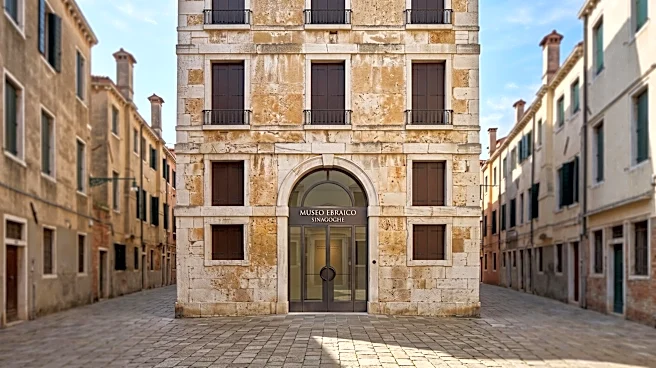
The Jewish Museum in Venice, Italy, is set to reopen next week after being closed for six years for a comprehensive multi-million euro renovation, expansion, and modernization. According to Jewish community President Dario Calimani, a news conference
is scheduled for October 20, followed by an official opening ceremony on October 21, with public access beginning October 22. The museum, founded in 1953 by the Venice Jewish Community and located on the main square of the historic Venice Ghetto, houses a collection of Judaica and provides access to some of the ghetto’s five historic synagogues. The nine-million-euro project, initially announced in July 2020 with an expected three-year timeline, received €1.65 million from the Italian Culture Ministry in 2022. The extensive work included the restoration of three 16th-century synagogues: the Great German Scola, the Scola Canton, and the Italian Scola. Future plans involve the restoration of the Levantine and Spanish Synagogues. The museum complex has been enlarged from 1,200 to 2,000 square meters, incorporating a Ghetto apartment to recreate Jewish family living conditions during that period. Structural reinforcements, modernization of air conditioning and heating systems, and expansion of facilities like the cafeteria, bookshop, and toilets were also part of the revamp. New exhibition and educational spaces have been added, and the Jewish community’s library and archive have been redesigned. The museum has also been adapted for disabled visitors with the installation of two internal lifts.
Why It's Important?
The reopening of the Venice Jewish Museum signifies a significant cultural and historical milestone, preserving and presenting the rich heritage of the Jewish community in Venice. This extensive renovation ensures the long-term viability of a crucial institution that educates the public about Jewish life, history, and contributions within the context of one of Italy's most iconic cities. The expansion and modernization efforts, including the restoration of 16th-century synagogues and the recreation of a Ghetto apartment, offer enhanced educational experiences, providing visitors with a deeper understanding of the challenges and resilience of the Jewish community. For the U.S., this event contributes to the broader global effort of Holocaust education and the fight against antisemitism, as it reinforces the importance of remembering and learning from historical events. The museum's renewed accessibility, including provisions for disabled visitors, promotes inclusivity and ensures that its valuable lessons can reach a wider audience. The investment in cultural preservation also highlights the ongoing commitment to maintaining historical sites that serve as vital links to the past, fostering interfaith dialogue and understanding on an international scale.
What's Next?
Following the official reopening on October 22, the Venice Jewish Museum will resume its role as a key cultural and educational institution. The immediate next steps involve welcoming the public to experience the newly renovated spaces, restored synagogues, and expanded exhibitions. Jewish community President Dario Calimani indicated that future plans include the restoration of two additional historic ghetto synagogues, the Levantine Synagogue and the Spanish Synagogue, suggesting a continued commitment to preserving the architectural and historical integrity of the Venice Ghetto. The museum will likely focus on promoting its new offerings, potentially through educational programs, guided tours, and cultural events, to attract both local and international visitors. The expanded facilities, including new exhibition and educational spaces, will allow for a broader range of programming. The modernized infrastructure, such as improved air conditioning and heating systems, along with enhanced accessibility for disabled visitors, will ensure a more comfortable and inclusive experience for all. The redesigned library and archive will also become more functional for researchers and scholars interested in Jewish history in Venice.
Beyond the Headlines
The reopening of the Venice Jewish Museum carries profound implications beyond its immediate cultural and historical significance. It represents a powerful statement against historical revisionism and a renewed commitment to memory in an era where antisemitism and intolerance are unfortunately resurfacing globally. By meticulously restoring and expanding the museum, the Venice Jewish Community and the Italian Culture Ministry are not merely preserving artifacts; they are actively safeguarding a narrative of resilience, cultural exchange, and the enduring presence of Jewish life in Europe. The recreation of a Ghetto apartment, for instance, offers a tangible and empathetic connection to the daily lives of Jewish families during a period of segregation, fostering a deeper understanding of historical injustices. This initiative also underscores the critical role of cultural institutions in promoting interfaith dialogue and combating prejudice. For the U.S., which grapples with its own history of discrimination and ongoing challenges of social cohesion, the Venice Jewish Museum serves as a poignant reminder of the importance of confronting difficult histories and fostering inclusive narratives. The project's emphasis on accessibility also highlights a broader ethical commitment to ensuring that historical knowledge is available to all, regardless of physical ability, reinforcing the universal value of heritage.