






What's Happening?
New research presented at the 2026 Annual Scientific Meeting of the American College of Allergy, Asthma and Immunology (ACAAI) indicates that many clinicians continue to order food allergy panel tests, despite being aware of their high false positive
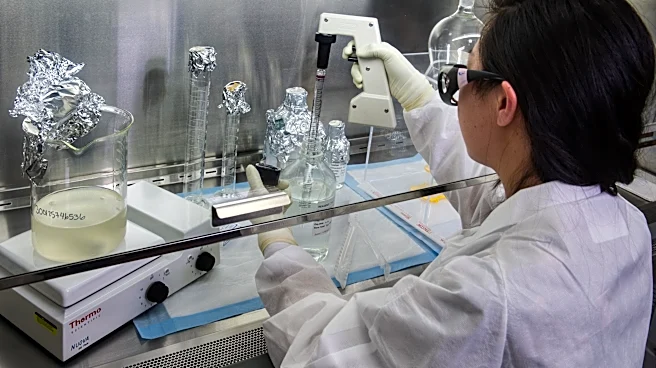
rates and expert guidelines advising against their routine use. Food allergy panel testing analyzes a person's blood for immunoglobulin E antibodies, which are immune system proteins associated with allergic reactions to various foods. These commercially available panels frequently yield false positive results, suggesting sensitization to foods even when a clinical food allergy does not exist. A survey of 300 clinicians who ordered at least one food allergy panel in 2024 found that 85% knew these panels often produce false positives, yet they still ordered them. Reasons included ordering for unvalidated indications like hives and eczema, or simply because a patient or family requested the test. Dr. Katelyn Wong, an allergist-immunologist and senior author of the study, highlighted that false positives can lead to unnecessary food avoidance, increased stress, and additional costs for families.
Why It's Important?
The continued reliance on food allergy panels with known false positive risks has several significant negative implications. For families, it can lead to unwarranted dietary restrictions, causing stress, limiting a child's diet unnecessarily, and potentially increasing the risk of developing actual food allergies through avoidance. From a healthcare system perspective, these tests contribute to unnecessary medical visits and costs. The discrepancy between clinicians' awareness of the tests' limitations and their continued use suggests a gap in the adoption of evidence-based guidelines in clinical practice. This practice can lead to misdiagnoses, inappropriate management strategies, and a diversion of resources from more effective diagnostic methods, such as supervised food challenges.
What's Next?
The findings suggest a need for enhanced education and implementation strategies to ensure clinicians adhere to expert recommendations regarding food allergy testing. Efforts should focus on clarifying the appropriate use of diagnostic tools and emphasizing the limitations of broad food allergy panels. Medical societies and professional organizations may need to reinforce guidelines and provide practical tools for clinicians to navigate patient requests for these tests. Promoting the use of more accurate diagnostic methods, such as oral food challenges, when a true allergy is suspected, will be crucial. Addressing the underlying reasons why clinicians continue to order these tests, such as patient demand or perceived convenience, will be key to improving diagnostic accuracy and patient care.
Beyond the Headlines
This issue highlights a broader challenge in medicine: the tension between patient demand, commercial availability of tests, and evidence-based practice. The ease of ordering a blood panel compared to the more complex and time-consuming process of a food challenge can make the former an attractive, albeit less accurate, option. This situation also touches upon the concept of 'medical overuse,' where tests or treatments are performed without clear clinical benefit, potentially causing harm. It underscores the importance of critical evaluation of diagnostic tools and the need for continuous medical education to bridge the gap between research findings and clinical application. Furthermore, it raises questions about how healthcare systems can better support clinicians in resisting patient pressure for tests that are not medically indicated, ensuring that patient care remains guided by scientific evidence.