









What's Happening?
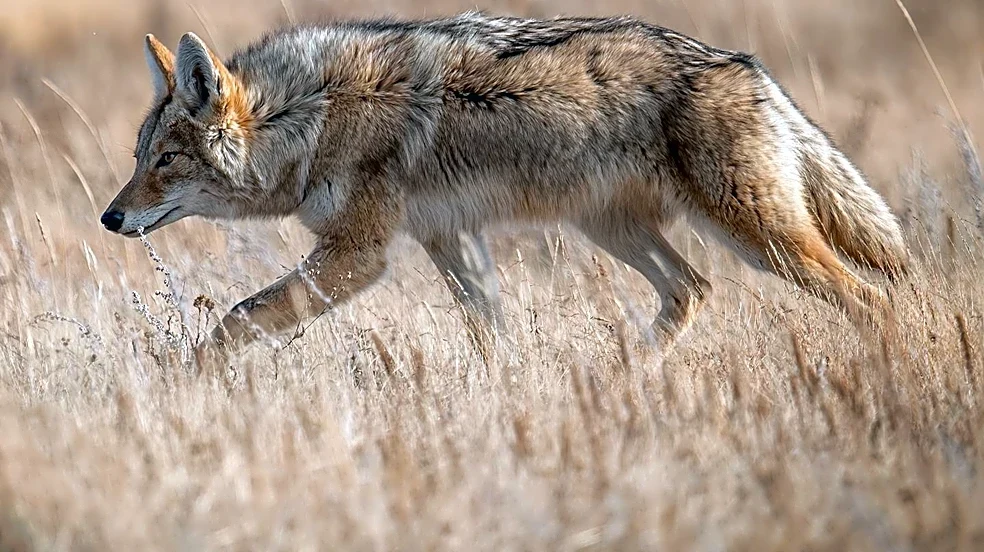
Coyotes in the Coachella Valley are demonstrating significant adaptability, thriving in a landscape that includes desert scrub, agricultural areas, washes, foothills, and residential neighborhoods. Their survival is attributed to their flexible diet,
which consists of rodents, rabbits, insects, reptiles, fruit, and carrion. This dietary versatility allows them to exploit various food opportunities presented by both natural habitats and human-modified environments. Coyotes are not confined to 'wild land' but frequently move between different patches of habitat, including developed areas. Their presence in urban settings means they can access food sources like fallen fruit from landscape trees, open trash bins, and pet food left outdoors. This adaptability highlights their ability to coexist with human populations, often utilizing resources unintentionally provided by people.
Why It's Important?
The adaptability of coyotes in the Coachella Valley has significant implications for urban planning, wildlife management, and public awareness. Their ability to thrive in diverse environments, including residential areas, necessitates a reevaluation of how human communities interact with local wildlife. The reliance of coyotes on human-provided food sources, such as pet food and trash, underscores the importance of responsible waste management and pet supervision to minimize human-wildlife conflicts. Understanding their movement patterns and dietary habits is crucial for developing effective strategies to manage coyote populations and ensure public safety, particularly concerning small pets and children. This situation also highlights the broader challenge of maintaining ecological balance in rapidly developing regions where natural habitats increasingly overlap with human settlements.
What's Next?
Moving forward, continued efforts will likely focus on public education campaigns to inform residents about responsible practices that can reduce coyote attractants. This includes securing trash bins, avoiding leaving pet food outdoors, and supervising small pets. Wildlife management agencies may also explore strategies to mitigate conflicts, such as promoting awareness about coyote behavior and appropriate responses during encounters. The ongoing presence of coyotes in urban and suburban areas suggests a need for integrated approaches that combine habitat conservation with community engagement. Further research into coyote movement and diet in specific urban contexts could provide valuable data for refining these management strategies and fostering a more harmonious coexistence between humans and wildlife in the Coachella Valley.
Beyond the Headlines
The presence of coyotes in the Coachella Valley's urban fabric raises deeper questions about the definition of 'wild' and 'urban' spaces. Their successful adaptation challenges the traditional notion of wildlife being confined to pristine natural environments, demonstrating how species can evolve to exploit new niches created by human development. This phenomenon also highlights the ethical considerations surrounding human responsibility in shaping ecosystems. The unintentional provision of food sources by humans blurs the lines between natural foraging and human-subsidized diets, potentially altering coyote behavior and population dynamics. This situation serves as a microcosm for broader discussions on biodiversity in anthropocentric landscapes and the long-term implications of human expansion on wildlife populations and their ecological roles.