




What's Happening?
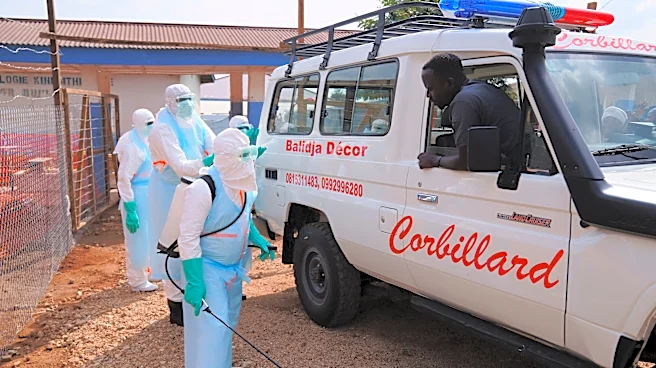
The Democratic Republic of Congo (DRC) is currently experiencing its second-largest Ebola outbreak in history, with over 3,500 confirmed cases and 1,556 deaths. This outbreak, caused by the Bundibugyo strain of the Ebola virus, has surpassed the previous
deadliest epidemic in the country, which occurred between 2018 and 2020. The outbreak is concentrated in the Ituri province, near the borders with South Sudan and Uganda, and has spread to four other provinces, including areas controlled by the Rwanda-backed M23 rebel group. The rapid spread of the virus has been exacerbated by ongoing conflict and instability in the region. Despite the severity of the outbreak, there is currently no approved vaccine or treatment for the Bundibugyo strain, although experimental vaccines are under development.
Why It's Important?
The rapid escalation of the Ebola outbreak in the DRC poses significant global health risks, as the virus can spread quickly across borders, especially in regions with high mobility and conflict. The lack of an approved vaccine or treatment for the Bundibugyo strain complicates efforts to control the outbreak, increasing the potential for further spread. The situation highlights the need for international attention and resources to support containment efforts and vaccine development. The outbreak also underscores the challenges of managing public health crises in conflict zones, where misinformation and instability can hinder response efforts. The global health community must prioritize support for the DRC to prevent the outbreak from escalating further and to protect neighboring countries from potential spillover.
What's Next?
Efforts to contain the outbreak will likely focus on accelerating vaccine development and distribution, as well as strengthening public health infrastructure in affected regions. The World Health Organization and other international health agencies are expected to increase their support for the DRC, providing resources and expertise to manage the crisis. Additionally, addressing the underlying conflict and instability in the region will be crucial to ensuring effective outbreak control. The international community may also need to prepare for potential cross-border transmission, implementing measures to monitor and respond to new cases in neighboring countries.
Beyond the Headlines
The outbreak in the DRC highlights broader issues related to global health security and the need for robust systems to detect and respond to emerging infectious diseases. It also raises ethical questions about the allocation of resources and attention to health crises in less developed regions. The situation may prompt a reevaluation of international health priorities and funding, emphasizing the importance of preparedness and resilience in the face of future pandemics. Furthermore, the outbreak could influence global health policy, encouraging greater collaboration and investment in vaccine research and development for neglected diseases.