







What's Happening?
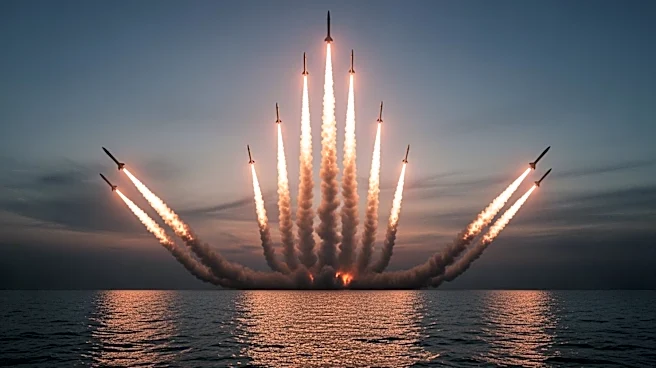
North Korea has launched multiple ballistic missiles toward the sea, marking its latest weapons testing activity this year. The launches occurred on Sunday morning from the North's eastern Sinpo area, as reported by South Korea's Joint Chiefs of Staff.
In response, South Korea has increased its surveillance posture and is actively exchanging information with the United States and Japan. The South Korean presidential office announced that its National Security Council plans to hold an emergency meeting to address the situation. Japan's Defense Ministry also detected the missile launches, noting that the weapons likely landed in the waters off North Korea's east coast. Japan has strongly protested to Pyongyang, asserting that the launches threaten regional and international peace and violate U.N. Security Council resolutions that prohibit any ballistic activities by North Korea.
Why It's Important?
The missile launches by North Korea are significant as they exacerbate existing tensions in the region and pose a challenge to international peace and security. The actions are a direct violation of U.N. Security Council resolutions, which could lead to increased diplomatic and economic pressure on North Korea. The situation also underscores the ongoing security concerns for neighboring countries, particularly South Korea and Japan, which are directly affected by North Korea's military activities. The United States, as a key ally of both South Korea and Japan, is likely to be involved in discussions and potential responses to these provocations. The launches also highlight North Korea's continued focus on expanding its nuclear capabilities, as indicated by leader Kim Jong Un's recent statements about enhancing the country's nuclear forces.
What's Next?
In the wake of these missile launches, South Korea's National Security Council is expected to convene an emergency meeting to discuss potential responses and strategies. The international community, including the United States and Japan, may consider additional diplomatic or economic measures to address North Korea's actions. There is also the possibility of increased military readiness and joint exercises among the U.S., South Korea, and Japan to deter further provocations. The situation may prompt discussions at the United Nations regarding enforcement of existing resolutions and potential new sanctions against North Korea.
Beyond the Headlines
The ongoing missile tests by North Korea could have long-term implications for regional security dynamics and international relations. The persistent threat posed by North Korea's military activities may lead to a reevaluation of defense strategies and alliances in the Asia-Pacific region. Additionally, the situation raises ethical and humanitarian concerns, as increased tensions could impact the lives of civilians in the region. The international community may also face challenges in balancing diplomatic efforts with the need to maintain pressure on North Korea to comply with international norms.