









What's Happening?
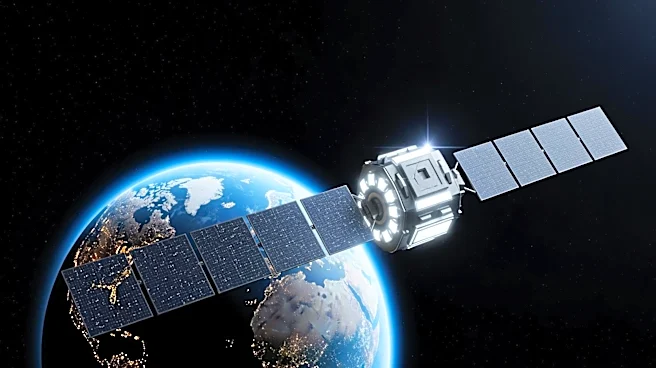
NASA is preparing to launch a mission aimed at boosting the orbit of its Swift Observatory, which has been in space since 2004. The mission involves the use of Katalyst Space's LINK robotic servicing satellite, which will be encapsulated inside a Northrop
Grumman Pegasus XL rocket. This rocket is air-launched from a Lockheed L-1011 TriStar aircraft, known as Stargazer, at an altitude of approximately 39,000 feet. The LINK satellite will attempt to rendezvous with the Swift Observatory, whose orbit has decayed from 373 miles to about 249 miles. The goal is to use LINK to elevate Swift back to a healthier orbit, thereby extending its operational life. This mission is notable for its complexity, involving multiple vehicles and precise coordination to ensure the successful boosting of the Swift Observatory.
Why It's Important?
The mission to boost the Swift Observatory is significant for several reasons. Firstly, it represents a critical effort to extend the life of a valuable scientific instrument that has been studying gamma-ray bursts, the most powerful explosions in the universe, since its launch. By boosting Swift's orbit, NASA can continue to gather important data that contributes to our understanding of these cosmic phenomena. Additionally, the mission showcases advancements in satellite servicing technology, highlighting the potential for future missions to extend the life of other satellites. This could lead to cost savings and increased sustainability in space operations, as satellites can be maintained and upgraded rather than replaced.
What's Next?
Following the successful encapsulation of the LINK satellite, the next step will be the launch of the Pegasus XL rocket from NASA's Wallops Flight Facility in Virginia. Once in space, the LINK satellite will need to precisely rendezvous with the Swift Observatory to perform the orbital boost. This requires careful planning and execution, as the timing and positioning must be exact. If successful, this mission could pave the way for similar satellite servicing missions in the future, potentially revolutionizing how space agencies manage and maintain their satellite fleets.