







What's Happening?
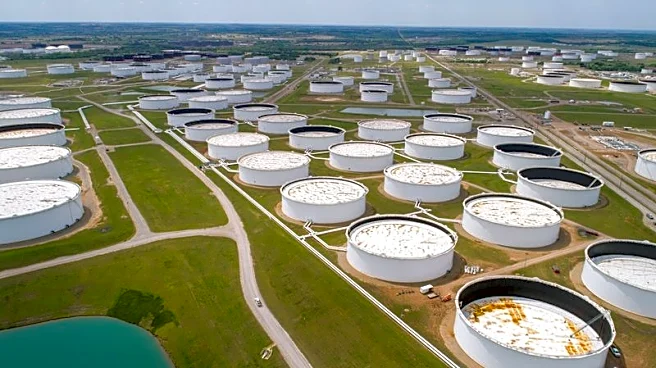
The U.S. Department of Energy (DOE) has authorized an emergency exchange of up to 400,000 barrels of crude oil from the Strategic Petroleum Reserve (SPR). This action is in response to a temporary crude oil supply disruption affecting Phillips 66's Lake
Charles Refinery in Louisiana. The crude oil will be sourced from the SPR’s West Hackberry site in Louisiana and is available for immediate delivery. The DOE stated that this exchange aims to mitigate a local refinery bottleneck, ensuring the continued production of transportation fuels for Louisiana and surrounding markets. Phillips 66 confirmed that its Lake Charles refinery would receive crude oil from the SPR, though a spokesperson declined to comment on specific refinery operations or commercial activities, stating they do not anticipate impacts to operations. This move comes as the SPR has reached its lowest level since 1982, with 282.7 million barrels as of the week ending October 16.
Why It's Important?
This emergency crude oil release is significant for maintaining regional fuel stability and supporting critical infrastructure. The Phillips 66 Lake Charles Refinery, with a capacity of approximately 264,000 barrels per day, is a key producer of transportation fuels. A disruption to its operations could lead to localized fuel shortages and price increases, impacting consumers and businesses in Louisiana and neighboring areas. By tapping into the SPR, the DOE aims to prevent such economic and logistical disruptions. This action also highlights the ongoing vulnerability of the U.S. energy supply chain to localized issues, even as broader global supply concerns persist. The declining levels of the SPR, which has been drawn down multiple times in recent years, raise questions about its long-term capacity to respond to future, potentially larger, energy crises.
What's Next?
Under the terms of the exchange, Phillips 66 is obligated to return the borrowed crude oil to the SPR with additional premium barrels. The exact timeline for this return was not specified, but it will be a crucial next step for replenishing the national reserve. The DOE will continue to monitor the situation at the Lake Charles Refinery and the broader energy market to ensure supply stability. This event may also prompt further discussions within the government regarding the optimal management and replenishment strategies for the SPR, especially given its current low levels. Industry stakeholders, including other refiners and fuel distributors, will likely observe the effectiveness of this intervention and its implications for future supply chain resilience.
Beyond the Headlines
The repeated use of the Strategic Petroleum Reserve, particularly for localized disruptions, underscores a broader challenge in U.S. energy policy: balancing immediate supply needs with long-term strategic reserves. While this specific release addresses a temporary bottleneck, the SPR's overall depletion to its lowest level in decades raises concerns about national energy security in the face of more significant geopolitical events or natural disasters. The decision to use the SPR for a localized issue, rather than solely for broader global deficits, suggests a pragmatic approach to maintaining domestic stability. However, it also highlights the increasing pressure on the SPR as a tool for managing various energy market fluctuations, potentially diminishing its capacity for truly catastrophic events. This trend could lead to a re-evaluation of the SPR's purpose and replenishment mechanisms.