
What's Happening?
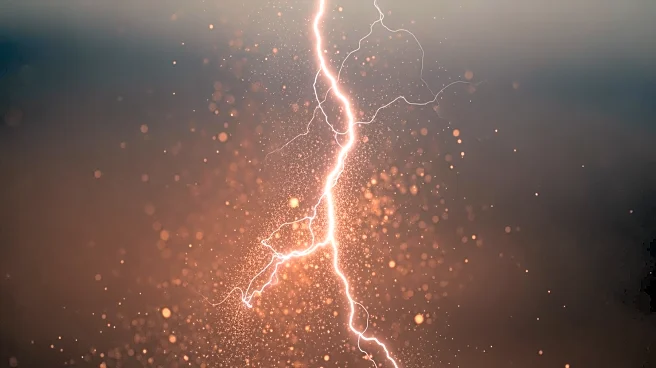
Research led by planetary scientist Alian Wang has uncovered the electrochemical processes driven by Martian dust activities. Using simulation chambers, Wang's team demonstrated how dust storms and dust devils
on Mars generate electrostatic discharges, leading to the formation of oxidized chemicals such as volatile chlorine species and (per)chlorates. These findings suggest that Martian dust activities have significantly shaped the planet's geochemical landscape, influencing both the surface and atmosphere. The study highlights the role of electrochemistry in Mars's chlorine cycle, with implications for understanding the planet's history and potential for supporting life.
Why It's Important?
This research provides a deeper understanding of Mars's chemical processes, revealing how dust-induced electrochemistry has contributed to the planet's current geochemical state. The findings have broader implications for planetary science, suggesting that similar electrochemical phenomena could occur on other celestial bodies like Venus and the moon. By shedding light on the interactions between Mars's atmosphere and surface, the study enhances our knowledge of planetary environments and the potential for life beyond Earth. It also informs future Mars missions and the search for life on other planets.
What's Next?
Wang's research opens new avenues for exploring electrochemical processes on other planets and moons. Future studies may investigate similar phenomena on Venus, the moon, and outer planetary systems, expanding our understanding of planetary chemistry across the solar system. These insights could guide future space missions and the development of technologies to study and potentially utilize these processes. As Mars continues to reveal its secrets, ongoing research will further unravel the mysteries of its environment and its capacity to support life.