



What's Happening?
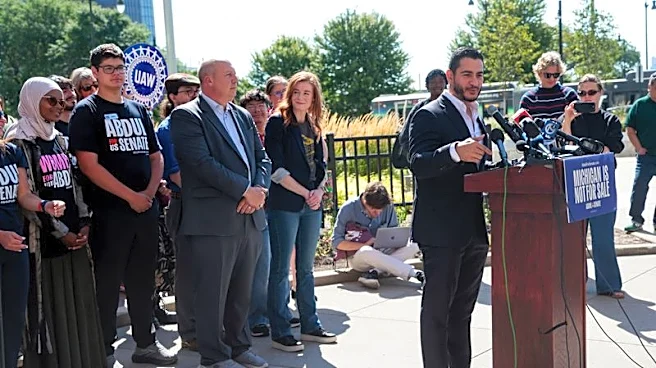
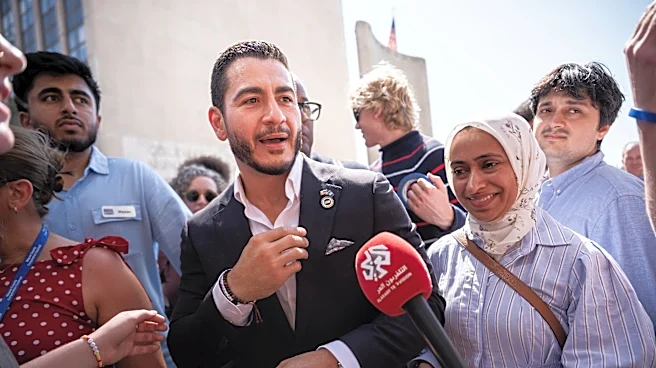
In a significant political development, Dr. Abdul El-Sayed has won the Michigan Democratic Senate primary, defeating a corporate-backed establishment candidate. Despite being outspent by a factor of four, El-Sayed's victory signals a shift in voter sentiment
against corporate influence in politics. This outcome follows similar victories by insurgent candidates like Zohran Mamdani in New York, suggesting a growing trend within the Democratic Party. The media has focused on whether such candidates can win future elections, rather than the reasons behind their support. This shift reflects a broader demand for political representatives who challenge concentrated economic power.
Why It's Important?
The victory of Dr. Abdul El-Sayed in Michigan highlights a potential shift in American politics, where voters are increasingly rejecting candidates backed by corporate interests. This trend could reshape the Democratic Party, traditionally reliant on corporate funding. The implications extend beyond the U.S., as similar sentiments are emerging in other countries like the UK. If this movement gains momentum, it could lead to significant changes in how political campaigns are funded and how political power is distributed, potentially reducing the influence of corporate money in politics and increasing the focus on policies that prioritize public interest.
What's Next?
The success of insurgent candidates like El-Sayed raises questions about the future of the Democratic Party and its relationship with corporate donors. As more voters demand representatives who prioritize public over corporate interests, the party may face internal challenges in balancing these demands with traditional funding sources. The upcoming general elections will test whether these candidates can maintain their momentum and win broader support. Additionally, this trend could inspire similar movements in other political systems, potentially leading to a global reevaluation of corporate influence in politics.