


What's Happening?
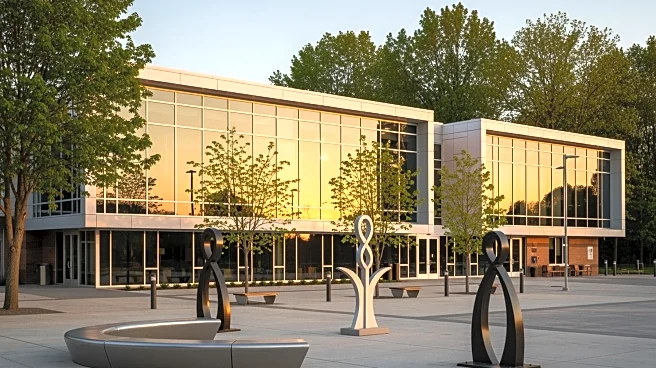
The groundbreaking of the new Canarsie Library in New York City marks a significant step in sustainable architecture, as it will be one of the city's first public buildings constructed using mass timber. This two-story, 11,000-square-foot facility will replace
the existing library, doubling its size to better serve the community. The project, led by Shawmut Design and Construction, incorporates sustainable features such as advanced heating, cooling, and electrical systems, along with solar panels and stormwater management. The design, developed by Studio Joseph, emphasizes community engagement and includes spaces for adults, teens, and children, as well as a public recording studio and a landscaped terrace. The library is expected to open next year.
Why It's Important?
The use of mass timber in the Canarsie Library project represents a shift towards more sustainable building practices in urban environments. Mass timber is a low-carbon alternative to traditional construction materials, offering both environmental benefits and aesthetic appeal. This project aligns with New York City's broader efforts to reduce carbon emissions in construction, as outlined in a 2022 directive by former Mayor Eric Adams. By adopting mass timber, the city not only reduces its carbon footprint but also sets a precedent for future public infrastructure projects. This initiative could influence other cities to consider similar sustainable practices, potentially transforming urban landscapes across the U.S.
What's Next?
As the Canarsie Library project progresses, it will serve as a model for future mass timber constructions in New York City. The NYC Mass Timber Studio, which supports such projects, will continue to promote the use of mass timber across the city. The success of this library could lead to increased adoption of sustainable building methods in other public and private developments. Additionally, the library's completion will provide valuable insights into the practicalities of mass timber construction, potentially influencing building codes and regulations to accommodate this innovative approach.