








What's Happening?
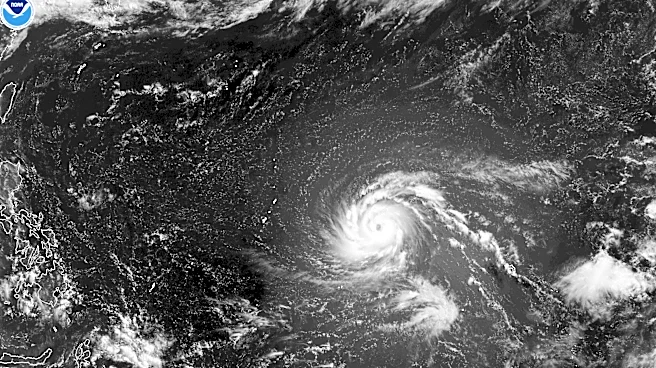
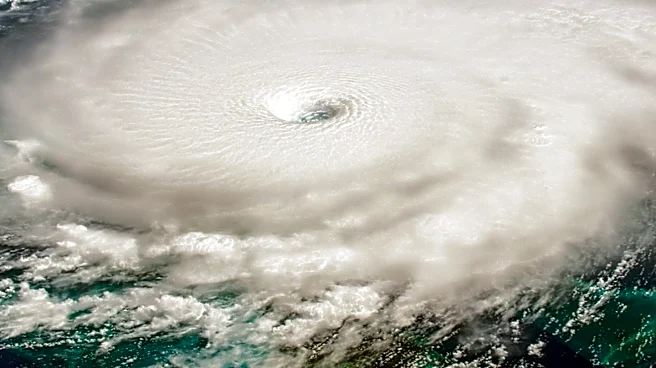
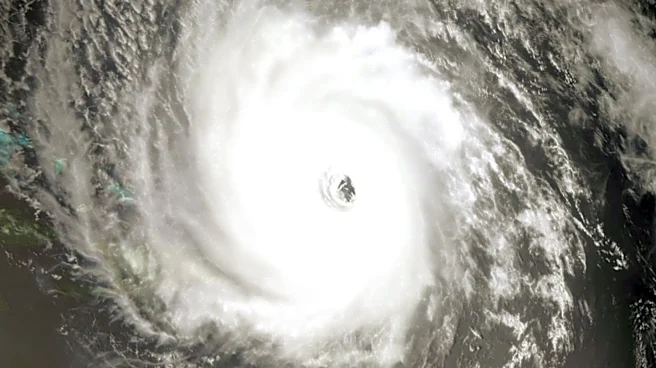
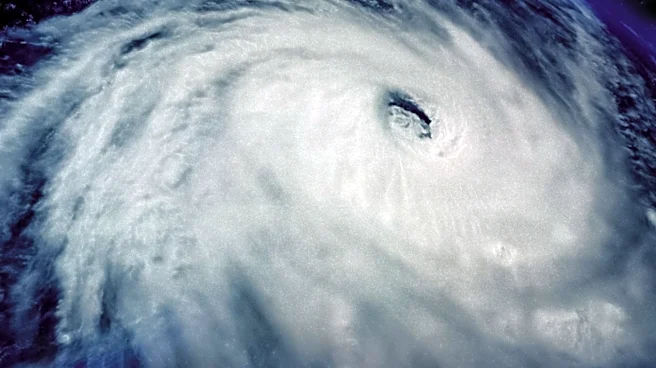
Typhoon Bavi, currently intensifying over the Pacific Ocean, is expected to impact the U.S. Northern Mariana Islands and Guam as a potentially dangerous Category 4 or 5 super typhoon. The Joint Typhoon Warning Center has forecasted that Bavi will reach
super typhoon status by Sunday, with maximum sustained winds possibly reaching 150 mph. The storm is following a path similar to that of Super Typhoon Sinlaku, which caused significant damage in April. Residents of the affected areas are advised to complete storm preparations by Sunday morning as conditions are expected to deteriorate rapidly. The Japan Meteorological Agency has reported Bavi's central pressure at 992 mb with sustained winds of 60 mph, and the storm is expected to strengthen further due to favorable conditions such as warm sea surface temperatures and low wind shear.
Why It's Important?
The potential impact of Typhoon Bavi on the Northern Mariana Islands and Guam is significant, as these areas are still recovering from the damage caused by Typhoon Sinlaku earlier this year. The economic and infrastructural damage from such storms can be extensive, with previous typhoons causing billions in damages and loss of life. The U.S. Northern Mariana Islands, a commonwealth with a significant population of U.S. citizens, could face severe disruptions. The frequency and intensity of such storms raise concerns about climate change and its role in increasing the occurrence of high-intensity tropical cyclones. The preparedness and response of local authorities and residents will be crucial in mitigating the potential impacts of the storm.
What's Next?
As Typhoon Bavi approaches, the issuance of tropical storm or typhoon watches and warnings is expected for the Mariana Islands. The storm's trajectory and intensity will be closely monitored by meteorological agencies, and further advisories will be issued as necessary. The potential for flash flooding, damaging winds, and rough surf poses a significant threat to the islands, and emergency services are likely to be on high alert. The aftermath of the storm will require coordinated recovery efforts, particularly if the islands experience significant damage similar to past events.