


What's Happening?
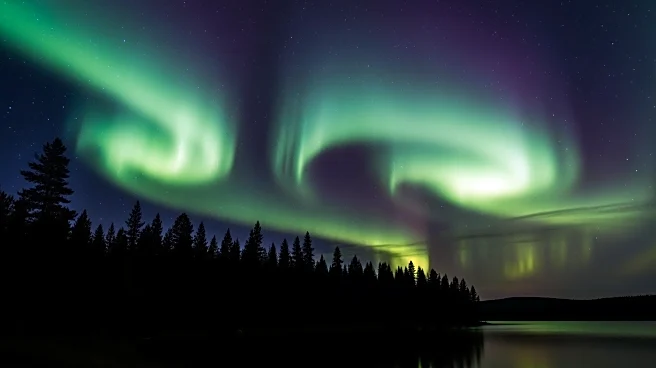
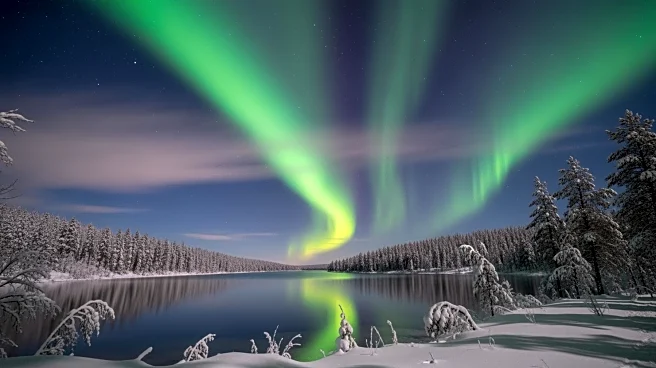
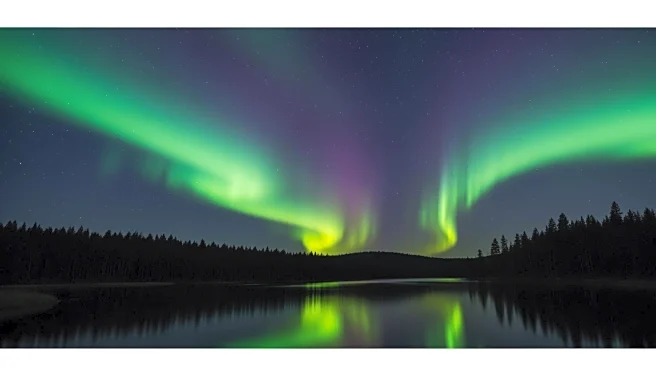
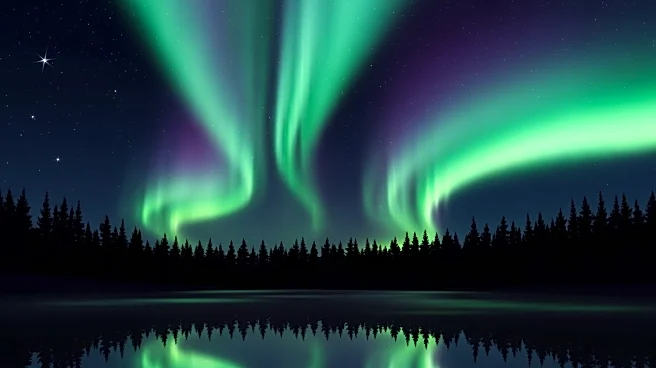
A geomagnetic storm is set to provide a rare opportunity for residents in 16 U.S. states to witness the northern lights, also known as the aurora borealis. According to the National Oceanic and Atmospheric Administration's Space Weather Prediction Center,
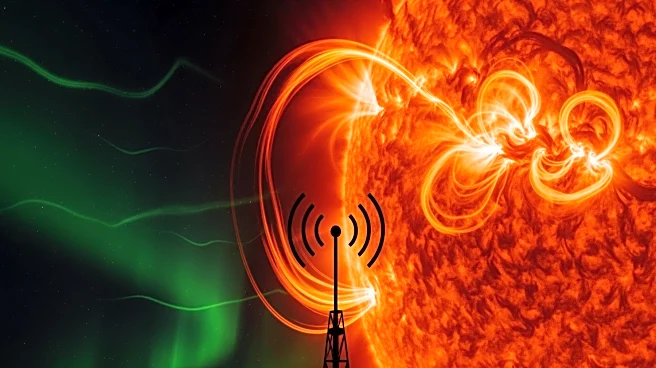
the phenomenon will be visible from late-night March 31 into the early morning of April 1. This event is triggered by a coronal mass ejection (CME) detected on March 29, which is expected to impact Earth, causing elevated geomagnetic activity. The states where the aurora might be visible include Oregon, Washington, Idaho, Montana, Wyoming, North Dakota, South Dakota, Minnesota, Iowa, Wisconsin, Michigan, New York, Vermont, New Hampshire, Maine, and Alaska. The best viewing times are between 10 p.m. and 2 a.m. local time, though this can vary based on location and weather conditions.
Why It's Important?
The occurrence of the northern lights in such a wide range of U.S. states is a rare event, typically limited to higher latitudes. This provides a unique opportunity for millions of Americans to experience a natural phenomenon that is often only seen in more northern regions. The event highlights the dynamic nature of space weather and its ability to affect Earth. For scientists and enthusiasts, it offers a chance to study and appreciate the interactions between solar activity and Earth's magnetic field. Additionally, it serves as a reminder of the broader impacts of solar phenomena on our planet, which can include disruptions to communication systems and power grids.
What's Next?
As the geomagnetic storm progresses, NOAA will continue to monitor and update forecasts to provide the most accurate information for those hoping to view the aurora. Enthusiasts are advised to find dark locations away from city lights for the best viewing experience. The event may also prompt increased interest and research into space weather phenomena, potentially leading to advancements in predicting and mitigating the effects of solar activity on Earth.