









What's Happening?
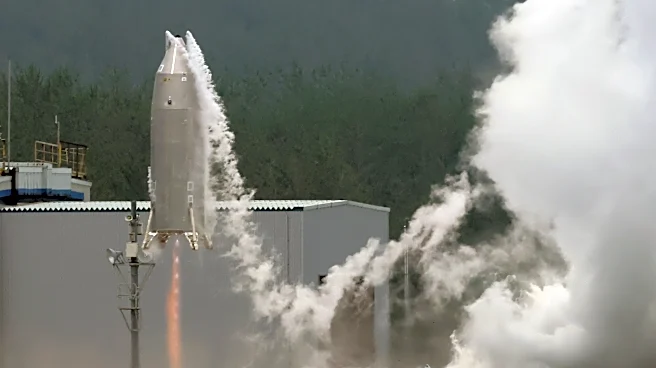
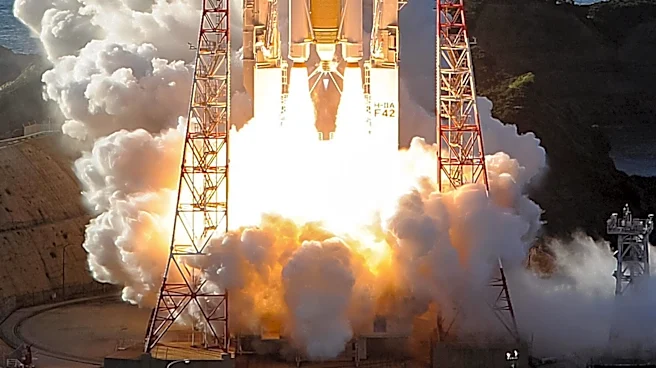
Japan's space agency, JAXA, successfully conducted the first test flight of its experimental reusable rocket, marking a significant step in reducing launch costs and competing in the global space market. The RV-X rocket, developed in collaboration with
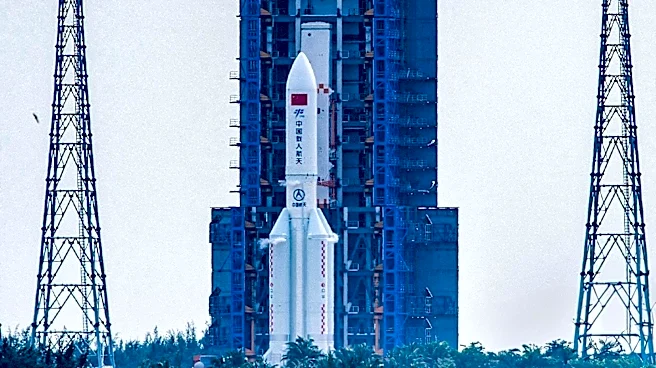
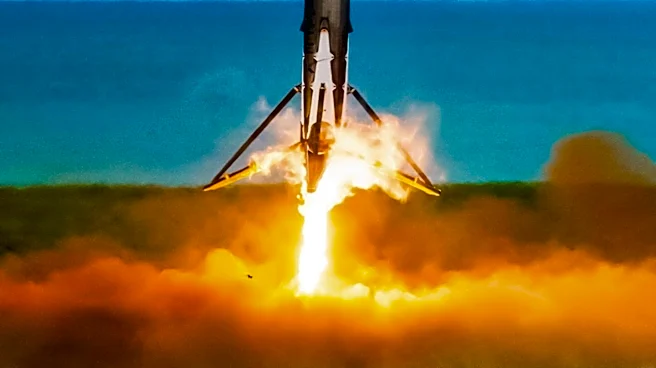
Mitsubishi Heavy Industries, lifted off from the Noshiro Rocket Testing Center, hovered, and landed safely after a brief flight. This test is part of Japan's efforts to develop technology similar to SpaceX's reusable rockets, which have been operational for several years. The RV-X is designed to be a cost-effective successor to Japan's current H3 series rockets. The successful test follows China's recent achievement of its first reusable rocket landing, highlighting the competitive nature of the space industry.
Why It's Important?
The successful test of Japan's reusable rocket represents a crucial advancement in the country's space capabilities, potentially lowering the cost of space launches and enhancing Japan's competitiveness in the global space market. This development is significant as it aligns with Japan's strategic goals of maintaining a stable and commercially viable space transport capability, which is vital for national security and economic interests. The ability to reuse rockets could lead to more frequent and affordable access to space, benefiting industries reliant on satellite technology and space exploration. As countries like China also make strides in reusable rocket technology, Japan's progress is essential to maintaining its position in the international space race.
What's Next?
JAXA plans to conduct further tests with the RV-X rocket, aiming to reach higher altitudes and refine the technology for future applications. The agency is also collaborating with France and Germany on reusable rocket technology, indicating a broader international effort to advance space capabilities. As Japan continues to develop this technology, it will likely seek to integrate it into its commercial space operations, potentially offering competitive launch services on the global market. The success of these initiatives could influence Japan's future space policy and its role in international space exploration efforts.