





What's Happening?
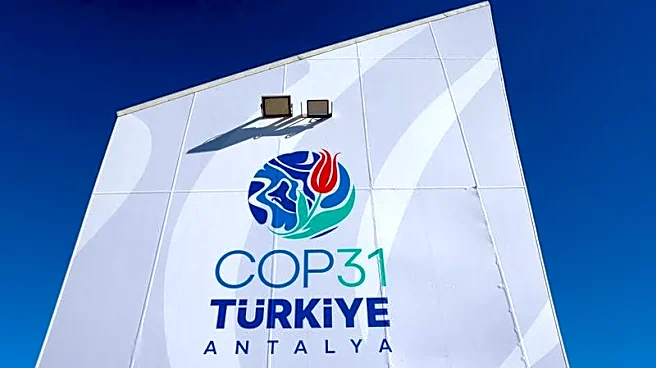
Peter Thomson, the United Nations Secretary-General’s Special Envoy for the Ocean, is advocating for the ocean to be a central focus at the upcoming UN Climate Change Conference (COP31) in Antalya, Turkey. For over three decades, Pacific island countries
have warned about the warming ocean's threat to food and energy security and global survival, but these warnings have often been dismissed as regional issues. The current climate devastation, exacerbated by an El Niño cycle and record-breaking ocean heat, demonstrates that this crisis extends beyond coastal regions. Rising sea levels are impacting fertile farmland and displacing communities, while ocean warming threatens global energy grids and supply chains. The ocean, as the planet's largest carbon and heat sink, absorbs 30% of CO2 emissions and 90% of excess heat, but this comes at a cost to its ecosystems. By 2050, ocean-linked disasters could lead to losses of $56 billion under a 2°C warming scenario, highlighting the urgent need to keep global warming as close to 1.5°C as possible.
Why It's Important?
The call to prioritize ocean-based climate action at COP31 is crucial for global economic and security stability. The ocean's role in regulating climate, absorbing significant amounts of CO2 and heat, makes its health integral to mitigating climate change. The economic risks are substantial, with potential losses from ocean-linked disasters reaching tens of billions of dollars, impacting industries like fishing, aquaculture, and tourism. For Pacific island countries, staying within the 1.5°C warming limit is an existential matter. The current financing for marine protection, estimated at $1.8 billion annually, falls significantly short of the approximately $14 billion needed, indicating a critical investment gap. Addressing this gap and mobilizing coalitions for sustainable fishing and tourism in marine protected areas could yield significant returns and protect vulnerable communities and economies.
What's Next?
At COP31, negotiators are expected to prominently include the ocean in discussions concerning emission reductions, resilience building, and climate finance. The latest ocean science will inform the next global stocktake, aiming to establish ocean-related commitments for countries to report on and standards for accountability. Countries with coastlines are encouraged to join the Blue NDC Challenge, a group committed to achieving national climate goals through ocean-based solutions. This includes accelerating the energy transition by greening ports and shipping, and developing offshore renewables. A rapid shift away from fossil fuels is identified as the most effective way to alleviate pressure on coral reefs, fisheries, coastal economies, and dependent local communities. Increased investment in marine protection is also a key next step to bridge the current funding gap.
Beyond the Headlines
The emphasis on the ocean at COP31 signifies a growing recognition of its interconnectedness with global climate systems and human well-being. Beyond the immediate economic and environmental impacts, the issue touches upon ethical responsibilities towards vulnerable island nations and future generations. The long-standing warnings from Pacific island countries, often overlooked, underscore a historical imbalance in addressing climate change impacts. Integrating ocean science into global climate policy could lead to a more holistic and effective approach to climate action, fostering a sense of shared responsibility for a vital global asset. This shift could also drive innovation in blue economy sectors and promote sustainable practices that benefit both the environment and human societies.