


What's Happening?
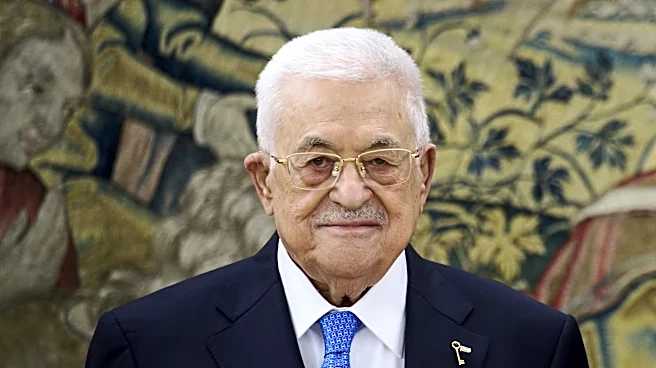
The President of the State of Palestine, Mahmoud Abbas, has conveyed his sincere greetings to the President of the Republic of Algeria, Abdelmadjid Tebboune. These greetings were extended on the occasion of the 72nd anniversary of Algeria's glorious November
Revolution. President Abbas's message also included well wishes to the Algerian people and government. In his communication, President Abbas specifically acknowledged and recalled the significant sacrifices, struggles, and heroism demonstrated by the Algerian people in their pursuit and achievement of independence. This diplomatic exchange highlights the ongoing relationship between the State of Palestine and Algeria, marked by mutual recognition and historical solidarity.
Why It's Important?
This exchange of greetings, while seemingly a routine diplomatic gesture, carries broader significance in the context of international relations and the ongoing Palestinian cause. For the State of Palestine, maintaining strong diplomatic ties with nations like Algeria, which has historically supported Palestinian self-determination, is crucial. Such gestures reinforce international recognition and solidarity, which are vital for the Palestinian Authority's diplomatic efforts on the global stage. For Algeria, receiving greetings from President Abbas on a significant national anniversary underscores its role as a supporter of the Palestinian cause and its historical commitment to anti-colonial struggles. This interaction can also be seen as a reaffirmation of the diplomatic standing of both leaders and their respective entities in the Middle East and North Africa region, influencing regional political dynamics and alliances.
What's Next?
While the immediate impact of this specific exchange is largely symbolic, it contributes to the ongoing diplomatic narrative between Palestine and Algeria. Future interactions may involve continued bilateral discussions on regional issues, humanitarian aid, or political support in international forums. This type of diplomatic communication often precedes or accompanies broader policy discussions, though no specific policy changes are indicated by this particular event. The continued acknowledgment of historical struggles, as highlighted in President Abbas's message, suggests a sustained emphasis on shared values and historical bonds that could influence future cooperative endeavors between the two entities.
Beyond the Headlines
Beyond the formal diplomatic pleasantries, this event subtly reinforces the narrative of historical solidarity among nations that have experienced colonial rule or are engaged in struggles for self-determination. The reference to Algeria's 'glorious November Revolution' and its 'sacrifices, struggles and heroism' by President Abbas draws a parallel to the Palestinian experience, fostering a sense of shared history and mutual support. This shared historical perspective can be a powerful tool in international diplomacy, allowing for deeper alliances and coordinated efforts on issues of sovereignty and human rights. It also underscores the enduring importance of historical memory in shaping contemporary foreign policy and diplomatic relations, particularly in regions with complex geopolitical histories.