



What's Happening?
A recent study published in Communications Earth & Environment has provided new insights into the decline of the Indus Valley Civilization, attributing it to a series of prolonged droughts. The research, led by Vimal Mishra and colleagues, utilized climate
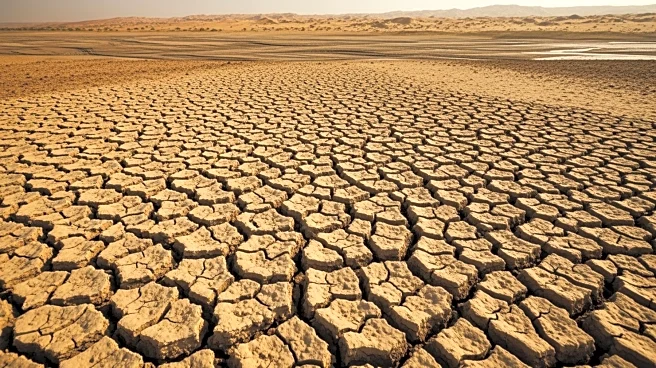
modeling and indirect environmental indicators such as chemical signatures in stalactites and stalagmites, as well as water level histories from lakes in northwest India. These findings suggest that between 4,450 and 3,400 years ago, the region experienced four major droughts, each lasting over 85 years. The study highlights a temperature increase of about 0.5 degrees Celsius and a 10 to 20 percent reduction in annual rainfall during this period. These environmental changes likely influenced settlement patterns, with populations moving closer to the Indus River as a more reliable water source.
Why It's Important?
The study's findings underscore the significant impact of long-term environmental changes on ancient civilizations. The Indus Valley Civilization, known for its advanced urban planning and water management, faced gradual decline due to persistent droughts. This research not only sheds light on historical climate impacts but also serves as a cautionary tale for modern societies facing climate change. Understanding how ancient societies adapted or succumbed to environmental pressures can inform current strategies for managing water resources and urban planning in the face of climate variability. The study emphasizes the need for sustainable water management practices to mitigate the effects of prolonged droughts, which remain a critical challenge for regions worldwide.
What's Next?
The study suggests that further research into ancient climate patterns could provide additional insights into the resilience and adaptability of early civilizations. For modern policymakers and urban planners, these findings highlight the importance of developing robust strategies to cope with climate-induced water scarcity. As climate change continues to pose significant challenges, there is a growing need for international collaboration to address water management and ensure the sustainability of urban centers. Future studies may focus on other ancient civilizations to understand how different societies responded to similar environmental challenges, potentially offering valuable lessons for contemporary climate adaptation efforts.